Exclusive: Kantar UK data reveals importance of advertising ‘sweet spot’

Kantar Insights' UK head of media Hannah Walley on the importance of ad equity, generational red herrings and what makes a good media mix.
FeaturesMarketing StrategyResearch and DataWhy it Works

In advertising terms, X is pretty much dead (sorry, Elon). The generational stereotypes we’ve all been buying into are a massive red herring. Consumers actually like ads (sometimes).

There were a lot of surprises in Kantar’s global Media Reactions 2024 report. Released last week, headlines news from the annual study focused largely largely on the continued demise of X (in case you missed it, just 4% of marketers believe advertising on the platform is safe for brands).

It’s a damning indictment of what has become of what was once one of adland’s favourite platforms.

As a result, marketers have started placing their ads elsewhere, with Amazon, TikTok, YouTube and Netflix all benefiting from X’s struggles.

However, according to exclusive data shared with Marketing Beat by Kantar Insights’ UK head of media Hannah Walley, it is quite clear that X is not the only brand navigating a rapidly-changing landscape.

The UK-specific data reveals that media brands with ad-only models have half the ad equity compared to those with paid subscriptions – while at the same time, ad equity for newspapers among Gen Z in the UK has increased by 29% over the last three years.

So, with consumer trust, attention and engagement all seemingly at crisis point, what does this latest news mean for UK marketers?

The importance of ad equity

“By ad equity, we’re referring to how open people – consumers – are to seeing advertising on different broadcast or online streaming channels and brands,” begins Walley.

Specifically, she reveals that the highest-scoring media brand – a paid subscription model – has an ad equity of 41, while the lowest – which relies solely on adverts to generate revenue – scores just 17.

This disparity throws up an immediate challenge for ad-driven media brands, compared with those which can use regular subscription fees to experiment with both formats and frequency.
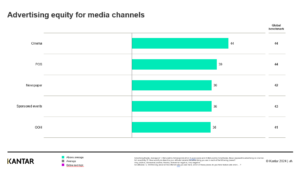
Top five UK media channels by ad equity. Kantar 2024.


In the ongoing battle between the two funding models it’s a crucial point of difference for UK marketers, advertisers and media buyers – although Walley believes the stark gap may be reflecting something of a honeymoon period.

“Media brands who are newer to the advertising model – but still have some subscription revenue coming in – typically have lower ad loads, so people are more receptive to the few ads they do run,” she explains.

“They’ll show fewer ads before playing the content and also have the freedom to do some interesting experiments with ad formats – so it’s not just pre-roll and mid-roll, but other less disruptive formats as well. All of which consumers prefer.”

Kantar’s sweet spot

From a marketer’s perspective, Kantar’s UK data reveals the need to work closely with media brands and agencies to find the “frequency sweet spot” for each channel.

“Marketers need to think about how they experiment with different ad formats and frequency – all of which allow them to optimise the consumer experience,” Walley explains.

“They can minimise irritation by making sure ads are neither too high frequency nor too disruptive. Being mindful of these things will all help consumers feel more positive about the brand, which in turn has a positive effect on the campaign.”

On that note, Walley reveals that – perhaps unsurprisingly – unskippable pre-roll and mid-roll ads are firmly in the bottom five ad formats for UK consumers. Advertising which is either part of the experience, or can be easily avoided if it’s irrelevant, comes top of the list.


Subscribe to Marketing Beat for free

Sign up here to get the latest marketing news sent straight to your inbox each morning


Creativity is key

The importance of creative quality in determining this optimal ad frequency – or ‘sweet spot’ – cannot be underestimated.

“A really strong creative will be able to have a higher frequency, for example, than a poorer creative,” Walley continues.

“But at the same time, a less engaging ad might need to be seen more often before it has any kind of impact on brand awareness or consideration.

“Kantar typically finds that each channel and campaign will give wildly different optimum frequencies based on certain creatives, so there’s a lot of testing and learning which needs to be done to try and find that sweet spot.”

This is all before taking frequency caps and consumer behaviour into account – after all, a viewer choosing to binge a whole series in one go will have a very different ad exposure experience to someone watching one episode a week.

This, Walley points out, has a significant effect on how they feel about the adverts they are being shown. Some social channels are already working on mitigating this, testing releasing ads in parts over a short period, rather than simply running the whole campaign at once.

“By exposing the adverts gradually, consumers get the impact of the full story over a longer period of time, rather than being exposed in one go and potentially becoming bored quite quickly,” Walley explains.

Read all about it

Equally interesting was Kantar’s revelation that ad equity for newspaper brands among UK Gen Z has increased by almost one third (29%) over the last three years. It’s a significant spike for a market that is generally considered to be in decline – and from a generational demographic that is typically believed to be focusing its attention elsewhere.

“The Gen Z ad equity increase for newspapers has been gradually increasing for a number of years now, but this is the first year we were able to see a significant spike,” Walley explains.
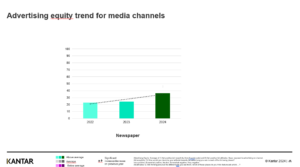
Kantar 2024.

“It’s a really interesting piece of data because it flies in the face of everything else we know. Gen Z is supposed to be getting its news from TikTok!”

The data shows that newspapers have not only grown in popularity among the younger audiences, but also that they perform well in terms of trust – something which is key for brands advertising on those platforms.

The surprising data reveals the importance of having a broad and varied media plan. Walley refers to previous Kantar analysis which revealed that – over a 10-year period – campaigns which under-delivered on brand metrics such as awareness or consideration typically invested heavily in just one or two channels.

“It proved the need for a media plan to have a good mix of channels and attention types in order to be more successful,” she explains.

“This is particularly interesting in light of our recent data, because newspapers have fallen off the radar a little bit in terms of when brands are optimising their channels. We know that more channels used in the right way can have more impact – and knowing that newspapers are becoming more attractive among younger audiences is a reminder not to discount them from modern media plans.”

Ultimately, Kantar’s learnings will help brands identify the range of formats and attention types that work for them, as – with a wide variety of equity across different platforms – it’s clear they all have a different role to play.

“We’re not saying put all your money in subscription models,” Walley concludes.

“Far from it. Brands have to find their audiences in different places. If you get your creative right, your media plan is really well rounded and you’re not putting all your eggs in one basket then it should all make the right impact.”


FeaturesMarketing StrategyResearch and DataWhy it Works

Exclusive: Kantar UK data reveals importance of advertising ‘sweet spot’

Kantar Insights' UK head of media Hannah Walley on the importance of ad equity, generational red herrings and what makes a good media mix.

Social

SUBSCRIBE TO OUR DAILY NEWSLETTER

  • This field is for validation purposes and should be left unchanged.

Most Read

In advertising terms, X is pretty much dead (sorry, Elon). The generational stereotypes we’ve all been buying into are a massive red herring. Consumers actually like ads (sometimes).

There were a lot of surprises in Kantar’s global Media Reactions 2024 report. Released last week, headlines news from the annual study focused largely largely on the continued demise of X (in case you missed it, just 4% of marketers believe advertising on the platform is safe for brands).

It’s a damning indictment of what has become of what was once one of adland’s favourite platforms.

As a result, marketers have started placing their ads elsewhere, with Amazon, TikTok, YouTube and Netflix all benefiting from X’s struggles.

However, according to exclusive data shared with Marketing Beat by Kantar Insights’ UK head of media Hannah Walley, it is quite clear that X is not the only brand navigating a rapidly-changing landscape.

The UK-specific data reveals that media brands with ad-only models have half the ad equity compared to those with paid subscriptions – while at the same time, ad equity for newspapers among Gen Z in the UK has increased by 29% over the last three years.

So, with consumer trust, attention and engagement all seemingly at crisis point, what does this latest news mean for UK marketers?

The importance of ad equity

“By ad equity, we’re referring to how open people – consumers – are to seeing advertising on different broadcast or online streaming channels and brands,” begins Walley.

Specifically, she reveals that the highest-scoring media brand – a paid subscription model – has an ad equity of 41, while the lowest – which relies solely on adverts to generate revenue – scores just 17.

This disparity throws up an immediate challenge for ad-driven media brands, compared with those which can use regular subscription fees to experiment with both formats and frequency.

Top five UK media channels by ad equity. Kantar 2024.


In the ongoing battle between the two funding models it’s a crucial point of difference for UK marketers, advertisers and media buyers – although Walley believes the stark gap may be reflecting something of a honeymoon period.

“Media brands who are newer to the advertising model – but still have some subscription revenue coming in – typically have lower ad loads, so people are more receptive to the few ads they do run,” she explains.

“They’ll show fewer ads before playing the content and also have the freedom to do some interesting experiments with ad formats – so it’s not just pre-roll and mid-roll, but other less disruptive formats as well. All of which consumers prefer.”

Kantar’s sweet spot

From a marketer’s perspective, Kantar’s UK data reveals the need to work closely with media brands and agencies to find the “frequency sweet spot” for each channel.

“Marketers need to think about how they experiment with different ad formats and frequency – all of which allow them to optimise the consumer experience,” Walley explains.

“They can minimise irritation by making sure ads are neither too high frequency nor too disruptive. Being mindful of these things will all help consumers feel more positive about the brand, which in turn has a positive effect on the campaign.”

On that note, Walley reveals that – perhaps unsurprisingly – unskippable pre-roll and mid-roll ads are firmly in the bottom five ad formats for UK consumers. Advertising which is either part of the experience, or can be easily avoided if it’s irrelevant, comes top of the list.


Subscribe to Marketing Beat for free

Sign up here to get the latest marketing news sent straight to your inbox each morning


Creativity is key

The importance of creative quality in determining this optimal ad frequency – or ‘sweet spot’ – cannot be underestimated.

“A really strong creative will be able to have a higher frequency, for example, than a poorer creative,” Walley continues.

“But at the same time, a less engaging ad might need to be seen more often before it has any kind of impact on brand awareness or consideration.

“Kantar typically finds that each channel and campaign will give wildly different optimum frequencies based on certain creatives, so there’s a lot of testing and learning which needs to be done to try and find that sweet spot.”

This is all before taking frequency caps and consumer behaviour into account – after all, a viewer choosing to binge a whole series in one go will have a very different ad exposure experience to someone watching one episode a week.

This, Walley points out, has a significant effect on how they feel about the adverts they are being shown. Some social channels are already working on mitigating this, testing releasing ads in parts over a short period, rather than simply running the whole campaign at once.

“By exposing the adverts gradually, consumers get the impact of the full story over a longer period of time, rather than being exposed in one go and potentially becoming bored quite quickly,” Walley explains.

Read all about it

Equally interesting was Kantar’s revelation that ad equity for newspaper brands among UK Gen Z has increased by almost one third (29%) over the last three years. It’s a significant spike for a market that is generally considered to be in decline – and from a generational demographic that is typically believed to be focusing its attention elsewhere.

“The Gen Z ad equity increase for newspapers has been gradually increasing for a number of years now, but this is the first year we were able to see a significant spike,” Walley explains.

Kantar 2024.

“It’s a really interesting piece of data because it flies in the face of everything else we know. Gen Z is supposed to be getting its news from TikTok!”

The data shows that newspapers have not only grown in popularity among the younger audiences, but also that they perform well in terms of trust – something which is key for brands advertising on those platforms.

The surprising data reveals the importance of having a broad and varied media plan. Walley refers to previous Kantar analysis which revealed that – over a 10-year period – campaigns which under-delivered on brand metrics such as awareness or consideration typically invested heavily in just one or two channels.

“It proved the need for a media plan to have a good mix of channels and attention types in order to be more successful,” she explains.

“This is particularly interesting in light of our recent data, because newspapers have fallen off the radar a little bit in terms of when brands are optimising their channels. We know that more channels used in the right way can have more impact – and knowing that newspapers are becoming more attractive among younger audiences is a reminder not to discount them from modern media plans.”

Ultimately, Kantar’s learnings will help brands identify the range of formats and attention types that work for them, as – with a wide variety of equity across different platforms – it’s clear they all have a different role to play.

“We’re not saying put all your money in subscription models,” Walley concludes.

“Far from it. Brands have to find their audiences in different places. If you get your creative right, your media plan is really well rounded and you’re not putting all your eggs in one basket then it should all make the right impact.”

FeaturesMarketing StrategyResearch and DataWhy it Works

RELATED STORIES

Most Read

Latest Feature

Latest Podcast

Menu

Marketing Beat has stopped reporting.

For retail Marketing insight please visit RG.

Retail Gazette