Lipton’s Peach Ice Tea PR stunt – refreshing or risky?

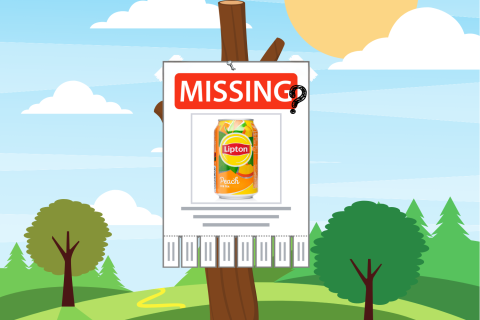
Lipton Ice Tea announced it was axing its most popular peach drink before u-turning on the decision in less than a day, in a move that it has described as a premature April Fool's prank.
AgenciesBrandsCreative and CampaignsFeaturesNews

Lipton Ice Tea announced it was axing its most popular peach drink before U-turning on the decision in less than a day, in a move that it has described as a premature April Fool’s prank.

In an era where protecting your consumer base and brand loyalty is more crucial than ever, did Lipton Tea hit the nail on the head or miss the mark? Grocery Gazette‘s Yasmeen Louis explores the issue.

In a season when shoppers are waking up from their winter hibernation and seeking new flavours for their baskets, Lipton Ice Tea picked a bold moment to drop a bombshell – the “discontinuation” of its beloved Peach variant.

Posting on social media on 19 March, the brand declared it had axed the popular drink, before assuring fans that there were other flavours in its range they could enjoy.

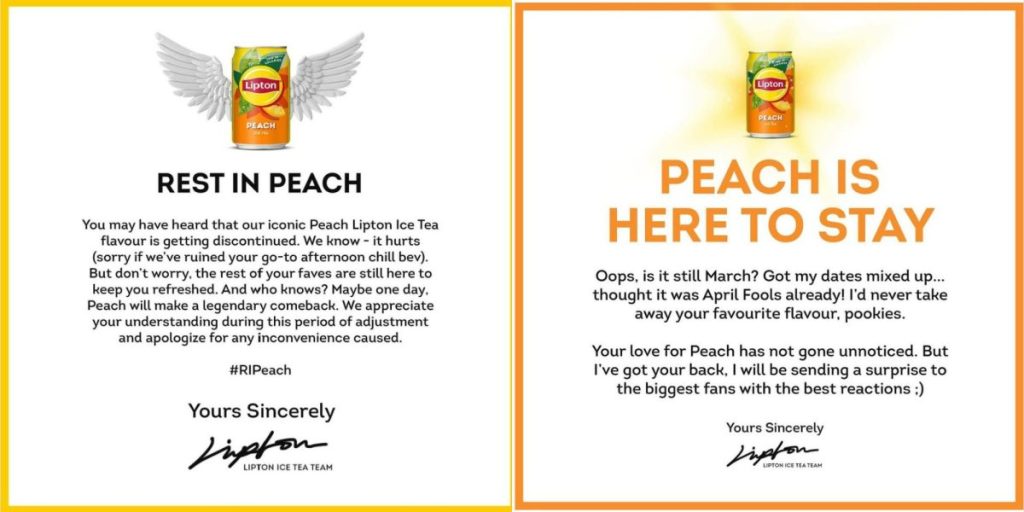
The move was met with both incredulity and dismay by social media users, who took to Instagram to comment on their shock at the apparent end-of-an-era for Lipton Ice Tea’s star product.Lipton took to social media to post the two statements, within less than 24 hours
Their shock was justified. Valued at £58m in August 2023, Lipton Ice Tea is one of the leading ready-to-drink tea brands in the UK, experiencing a 27% value growth in 2022.

While the exact contribution of the Peach flavour to these figures is not specified, the drink plays a significant role in Lipton’s product line-up and is widely accepted as its most popular.

A choice to scrap this star player would have been a peculiar – and arguably misguided – shift in portfolio strategy.

However, it would not be the only Fast-Moving Consumer Goods (FMCG) giant to allow a popular product to bite the dust, much to the horror of its loyal fan base. Nestlé faced social media uproar over the axing of its chocolate bars Caramac and Animal Bar in 2023, and then again for the discontinuation of its 54-year-old chocolate biscuit bar Breakaway.

Yet in an equally baffling move, less than 24 hours after its original post, Lipton once again took to social media to declare a U-turn, stating the drink would not be discontinued after all. The post reassured fans the flavour was going nowhere and offered free products to the most dramatic mourners online.

Describing the move as an “April Fools” prank, the PR stunt raised questions about whether the ice tea brand was attempting to capitalise on its fans’ shock and drum-up demand for its products by creating a perceived scarcity.

At face value, it was a cheeky stunt, but behind the social media hype, industry voices are divided. We caught up with marketing experts to ask if this was a clever PR move, or a short-sighted ploy that risks long-term consumer trust?

Could trust issues brew over Lipton’s tea stunt?

There’s no denying the stunt got people talking. At a time when kombucha, health-driven and premium drinks are crowding the shelf space, Lipton’s classic peach tea – launched in 2004 – was suddenly trending again. But will this fleeting attention equal commercial success? Not necessarily, say marketing experts.

Kat Patterson, managing director at Art of the Possible, raises a critical point.

“This was all about shock value and PR… but did this actually drive meaningful new sales? Probably not.”

The issue, she says, is that the only people impacted by such stunts, ones who would “rush to stockpile” after hearing the news, are already loyal purchasers who probably had the product in their fridges.

So while the campaign certainly earned media coverage, it may have done little to shift actual behaviour in the chiller aisle.


Subscribe to Marketing Beat for free

Sign up here to get the latest agency-related news sent straight to your inbox each morning


More concerningly, Patterson warns, is a risk that the brand could dent the trust its customers have.

“If consumers feel they’ve been tricked,” the damage lingers, with the risk being consumer trust erosion, she says.

In a world where authenticity and emotional connection increasingly matter, especially among Gen Z and millennial shoppers, being perceived as manipulative can be a dealbreaker.

“A move like this doesn’t necessarily shift consumer behaviour long-term – it just gets column inches and views,” says Patterson.

“The bigger question is: Is the short-term attention worth the long-term impact on brand perception?”

“A brand’s reputation is built on trust and authenticity, if consumers feel they’ve been tricked, that sentiment can linger far beyond the momentary PR win. Consumers are savvy, and once they sense a marketing gimmick, it can make a brand feel less credible, less premium, and even less worth their loyalty.”

Rachael Born, managing partner at Iris Worldwide, echoes that sentiment.

“If I were a peach iced tea fan, I would probably just defect to one of their competitors,” she says.

“If the brand’s intention is to create demand from perceived scarcity, it’s quite risky, it would have to be really certain about its consumer base and brand loyalty to do so.”

All fizz, no flavour?
Perhaps the most damning perspective comes from Atomic London‘s head of strategy Nicky Vita, who compares Lipton’s stunt to Duolingo’s widely praised “death” of its mascot, Duo, in a social media campaign that launched earlier this year.

the stunt felt hollow, unrewarding and vacuous

While Duolingo layered its gag with story arcs, fan interaction, and days of rich social content, Vita says Lipton pulled the rug out and then walked away.

“This Lipton PR stunt appears – at least at first glance – to be a copy-cat of Duolingo’s ‘killing’ of its sacred owl, Duo, earlier this year,” says Vita.

“The striking difference is everything that happened after the ‘announcement’. Duolingo really leaned into people’s relationship with the brand and with Duo in particular.”

Speaking about the differences between the two stunts, Vita says the language app’s campaign had a “sense of playfulness throughout”, building multiple storylines around the reaction to Duo’s death, rewarding people’s comments, actions and reactions with TikTok videos, updated social media profiles, and involving other characters to “carry his coffin” and reaching out to celebrities.

The campaign ended with a final challenge, inviting people back into the app to complete a “February Challenge” to hopefully “Bring Duo back to life”.
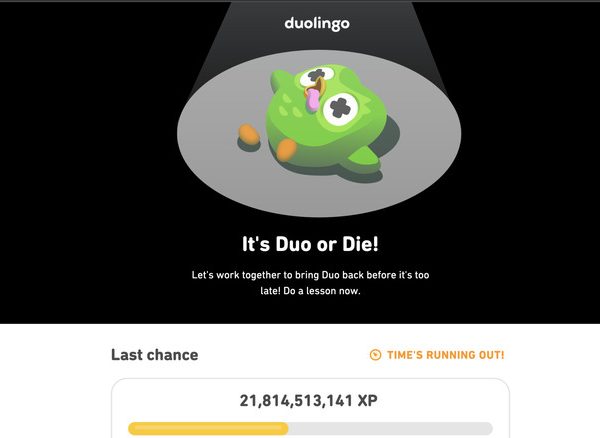
“After exactly one week, he was back. In comparison, [Lipton’s] stunt felt hollow, unrewarding and vacuous,” says Vita.

“What was the reasoning for ‘killing’ Peach beyond some short-lived engagement? Where were the breadcrumbs and builds for the biggest fans? Where were the builds that – with enough time – could have given the brand multiple reasons to respond to and engage with people, to titillate and delight them? Why go to all those lengths to bring Peach back a day later without any real rhyme or reason?”

“One could argue that it was a nice idea, poorly executed. Another could argue that it’s already been done recently, so let it rest. At the very least, it was a missed opportunity to deeply engage with fans.”


AgenciesBrandsCreative and CampaignsFeaturesNews

Lipton’s Peach Ice Tea PR stunt – refreshing or risky?

Lipton Ice Tea announced it was axing its most popular peach drink before u-turning on the decision in less than a day, in a move that it has described as a premature April Fool's prank.

Social

SUBSCRIBE TO OUR DAILY NEWSLETTER

  • This field is for validation purposes and should be left unchanged.

Most Read

Lipton Ice Tea announced it was axing its most popular peach drink before U-turning on the decision in less than a day, in a move that it has described as a premature April Fool’s prank.

In an era where protecting your consumer base and brand loyalty is more crucial than ever, did Lipton Tea hit the nail on the head or miss the mark? Grocery Gazette‘s Yasmeen Louis explores the issue.

In a season when shoppers are waking up from their winter hibernation and seeking new flavours for their baskets, Lipton Ice Tea picked a bold moment to drop a bombshell – the “discontinuation” of its beloved Peach variant.

Posting on social media on 19 March, the brand declared it had axed the popular drink, before assuring fans that there were other flavours in its range they could enjoy.

The move was met with both incredulity and dismay by social media users, who took to Instagram to comment on their shock at the apparent end-of-an-era for Lipton Ice Tea’s star product.Lipton took to social media to post the two statements, within less than 24 hours

Their shock was justified. Valued at £58m in August 2023, Lipton Ice Tea is one of the leading ready-to-drink tea brands in the UK, experiencing a 27% value growth in 2022.

While the exact contribution of the Peach flavour to these figures is not specified, the drink plays a significant role in Lipton’s product line-up and is widely accepted as its most popular.

A choice to scrap this star player would have been a peculiar – and arguably misguided – shift in portfolio strategy.

However, it would not be the only Fast-Moving Consumer Goods (FMCG) giant to allow a popular product to bite the dust, much to the horror of its loyal fan base. Nestlé faced social media uproar over the axing of its chocolate bars Caramac and Animal Bar in 2023, and then again for the discontinuation of its 54-year-old chocolate biscuit bar Breakaway.

Yet in an equally baffling move, less than 24 hours after its original post, Lipton once again took to social media to declare a U-turn, stating the drink would not be discontinued after all. The post reassured fans the flavour was going nowhere and offered free products to the most dramatic mourners online.

Describing the move as an “April Fools” prank, the PR stunt raised questions about whether the ice tea brand was attempting to capitalise on its fans’ shock and drum-up demand for its products by creating a perceived scarcity.

At face value, it was a cheeky stunt, but behind the social media hype, industry voices are divided. We caught up with marketing experts to ask if this was a clever PR move, or a short-sighted ploy that risks long-term consumer trust?

Could trust issues brew over Lipton’s tea stunt?

There’s no denying the stunt got people talking. At a time when kombucha, health-driven and premium drinks are crowding the shelf space, Lipton’s classic peach tea – launched in 2004 – was suddenly trending again. But will this fleeting attention equal commercial success? Not necessarily, say marketing experts.

Kat Patterson, managing director at Art of the Possible, raises a critical point.

“This was all about shock value and PR… but did this actually drive meaningful new sales? Probably not.”

The issue, she says, is that the only people impacted by such stunts, ones who would “rush to stockpile” after hearing the news, are already loyal purchasers who probably had the product in their fridges.

So while the campaign certainly earned media coverage, it may have done little to shift actual behaviour in the chiller aisle.


Subscribe to Marketing Beat for free

Sign up here to get the latest agency-related news sent straight to your inbox each morning


More concerningly, Patterson warns, is a risk that the brand could dent the trust its customers have.

“If consumers feel they’ve been tricked,” the damage lingers, with the risk being consumer trust erosion, she says.

In a world where authenticity and emotional connection increasingly matter, especially among Gen Z and millennial shoppers, being perceived as manipulative can be a dealbreaker.

“A move like this doesn’t necessarily shift consumer behaviour long-term – it just gets column inches and views,” says Patterson.

“The bigger question is: Is the short-term attention worth the long-term impact on brand perception?”

“A brand’s reputation is built on trust and authenticity, if consumers feel they’ve been tricked, that sentiment can linger far beyond the momentary PR win. Consumers are savvy, and once they sense a marketing gimmick, it can make a brand feel less credible, less premium, and even less worth their loyalty.”

Rachael Born, managing partner at Iris Worldwide, echoes that sentiment.

“If I were a peach iced tea fan, I would probably just defect to one of their competitors,” she says.

“If the brand’s intention is to create demand from perceived scarcity, it’s quite risky, it would have to be really certain about its consumer base and brand loyalty to do so.”

All fizz, no flavour?
Perhaps the most damning perspective comes from Atomic London‘s head of strategy Nicky Vita, who compares Lipton’s stunt to Duolingo’s widely praised “death” of its mascot, Duo, in a social media campaign that launched earlier this year.

the stunt felt hollow, unrewarding and vacuous

While Duolingo layered its gag with story arcs, fan interaction, and days of rich social content, Vita says Lipton pulled the rug out and then walked away.

“This Lipton PR stunt appears – at least at first glance – to be a copy-cat of Duolingo’s ‘killing’ of its sacred owl, Duo, earlier this year,” says Vita.

“The striking difference is everything that happened after the ‘announcement’. Duolingo really leaned into people’s relationship with the brand and with Duo in particular.”

Speaking about the differences between the two stunts, Vita says the language app’s campaign had a “sense of playfulness throughout”, building multiple storylines around the reaction to Duo’s death, rewarding people’s comments, actions and reactions with TikTok videos, updated social media profiles, and involving other characters to “carry his coffin” and reaching out to celebrities.

The campaign ended with a final challenge, inviting people back into the app to complete a “February Challenge” to hopefully “Bring Duo back to life”.

“After exactly one week, he was back. In comparison, [Lipton’s] stunt felt hollow, unrewarding and vacuous,” says Vita.

“What was the reasoning for ‘killing’ Peach beyond some short-lived engagement? Where were the breadcrumbs and builds for the biggest fans? Where were the builds that – with enough time – could have given the brand multiple reasons to respond to and engage with people, to titillate and delight them? Why go to all those lengths to bring Peach back a day later without any real rhyme or reason?”

“One could argue that it was a nice idea, poorly executed. Another could argue that it’s already been done recently, so let it rest. At the very least, it was a missed opportunity to deeply engage with fans.”

AgenciesBrandsCreative and CampaignsFeaturesNews

RELATED STORIES

Most Read

Latest Feature

Latest Podcast

Menu