AskGamblers OOH urges UK betters to ‘check in’ with their gut instincts

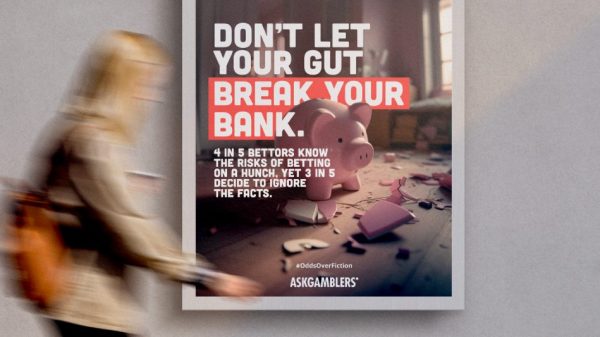
Out of home poster reads "It's time for a check in with your gut instincts. 1 in 5 betters continue to bet with their gut despite their losses. The AskGamblers out-of-home works use the hashtag #oddsoverfiction to highlight the financial and emotional danger of trusting instinct over data.
Creative and CampaignsNews

Casino affiliate website AskGamblers has urged UK betters to “check in” with their gut instincts before placing sports bets online as findings reveal many betters go against their better judgement.

Entitled “Don’t Trust Your Gut”, the educational campaign began with a survey of 1,000 UK sports betters and found that over half of Brits rely on their gut instincts over data when placing sports bets online. The striking set of out-of-home works include the hashtag #OddsOverFiction which is sparked by the further finding that over a third of UK betters, particularly men (34%), regret doing so.
AskGamblers content editor Irena Dučić said: “When creating the campaign, we deliberately played on the concept of gut health—reimagining it in relation to gut instincts which we had discovered is a prominent topic and issue in sports betting behaviour.

“Just like we’re told to take care of our physical gut health, we wanted to visually encourage bettors to ‘check in’ on their gut instincts, urging bettors not to trust their intuition before making financial decisions when betting on sports.We believe the #OddsOverFiction tagline also reinforced the importance of balancing instinct with smarter, data-backed choices.”


Subscribe to Marketing Beat for free

Sign up here to get the latest marketing news sent straight to your inbox each morning


Despite the fact that most gamblers trust their gut instinct, the research revealed that 84% of UK bettors recognise the financial risks associated with gut intuition.

Although they know the risks, 60% of UK betters express confidence in their abilities when making gut-based decisions. More strikingly over a third (36%) wrongly believe this yields better results than data.

Dučić added: “When creating the campaign, we found a common issue in sports betting: while intuition may feel like a good feeling, it’s often misleading,” said AskGamblers content editor Irena Ducic.

“What was striking was the misplaced confidence we found when analysing the results, with over a third of UK bettors wrongly believing their instincts are more reliable than data. This gap pointed out the need for better education on data-driven strategies and a shift in the focus from intuition to informed decision-making.”

Gambling advertising is under scrutiny with politicians, including Labour’s Alex Sopel, calling for greater restrictions.

A white paper on gambling adverts released last year came under attack from members of the Culture, Media and Sport Select Committee who said it did not take a “precautionary enough approach”.

This year, the number of Premier League adverts shown during the league’s opening week trebled according to GambleAware funded research from the University of Bristol.


Creative and CampaignsNews

AskGamblers OOH urges UK betters to ‘check in’ with their gut instincts

Out of home poster reads "It's time for a check in with your gut instincts. 1 in 5 betters continue to bet with their gut despite their losses. The AskGamblers out-of-home works use the hashtag #oddsoverfiction to highlight the financial and emotional danger of trusting instinct over data.

Social

SUBSCRIBE TO OUR DAILY NEWSLETTER

  • This field is for validation purposes and should be left unchanged.

Most Read

Casino affiliate website AskGamblers has urged UK betters to “check in” with their gut instincts before placing sports bets online as findings reveal many betters go against their better judgement.

Entitled “Don’t Trust Your Gut”, the educational campaign began with a survey of 1,000 UK sports betters and found that over half of Brits rely on their gut instincts over data when placing sports bets online. The striking set of out-of-home works include the hashtag #OddsOverFiction which is sparked by the further finding that over a third of UK betters, particularly men (34%), regret doing so.

AskGamblers content editor Irena Dučić said: “When creating the campaign, we deliberately played on the concept of gut health—reimagining it in relation to gut instincts which we had discovered is a prominent topic and issue in sports betting behaviour.

“Just like we’re told to take care of our physical gut health, we wanted to visually encourage bettors to ‘check in’ on their gut instincts, urging bettors not to trust their intuition before making financial decisions when betting on sports.We believe the #OddsOverFiction tagline also reinforced the importance of balancing instinct with smarter, data-backed choices.”


Subscribe to Marketing Beat for free

Sign up here to get the latest marketing news sent straight to your inbox each morning


Despite the fact that most gamblers trust their gut instinct, the research revealed that 84% of UK bettors recognise the financial risks associated with gut intuition.

Although they know the risks, 60% of UK betters express confidence in their abilities when making gut-based decisions. More strikingly over a third (36%) wrongly believe this yields better results than data.

Dučić added: “When creating the campaign, we found a common issue in sports betting: while intuition may feel like a good feeling, it’s often misleading,” said AskGamblers content editor Irena Ducic.

“What was striking was the misplaced confidence we found when analysing the results, with over a third of UK bettors wrongly believing their instincts are more reliable than data. This gap pointed out the need for better education on data-driven strategies and a shift in the focus from intuition to informed decision-making.”

Gambling advertising is under scrutiny with politicians, including Labour’s Alex Sopel, calling for greater restrictions.

A white paper on gambling adverts released last year came under attack from members of the Culture, Media and Sport Select Committee who said it did not take a “precautionary enough approach”.

This year, the number of Premier League adverts shown during the league’s opening week trebled according to GambleAware funded research from the University of Bristol.

Creative and CampaignsNews

RELATED STORIES

Most Read

Latest Feature

Latest Podcast

Menu