For England fans at least, it’s now nearly 60 years of hurt, but that’s also 60 years of hope. Like the Baddiel, Skinner and Lightning Seeds song, I was born in 1996, I have a three lions shirt, and I am excited and pessimistic all at once.
Devastatingly, there are fans who have the same year on their birth certificate but won’t get to live the joy and pain of the upcoming tournament.
While we usually associate heart disease with those who are older and who have lived much more than just Euro 96, at least twelve people under the age of 35 die from a heart condition in the UK every week.
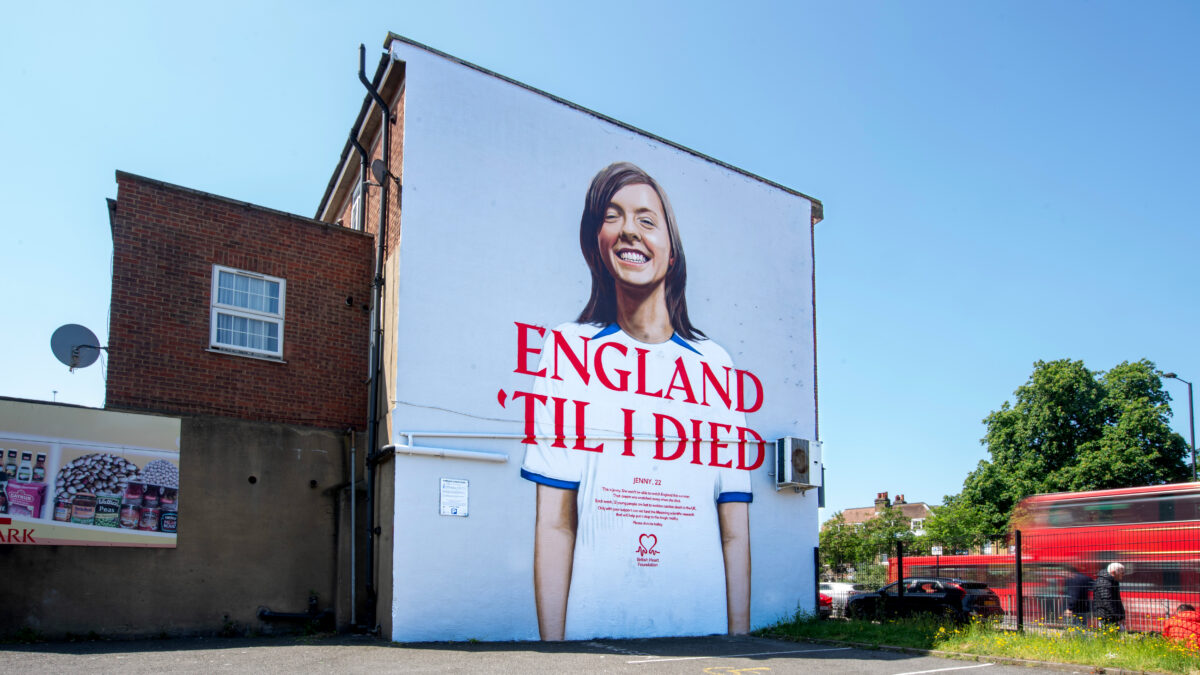
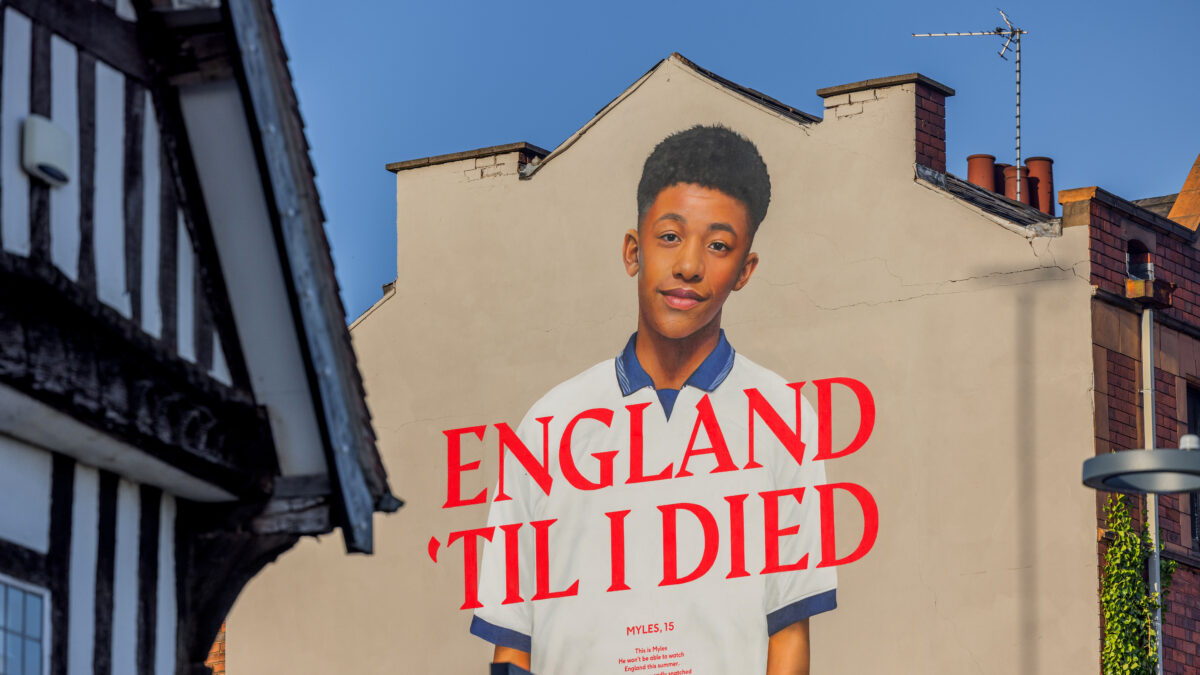
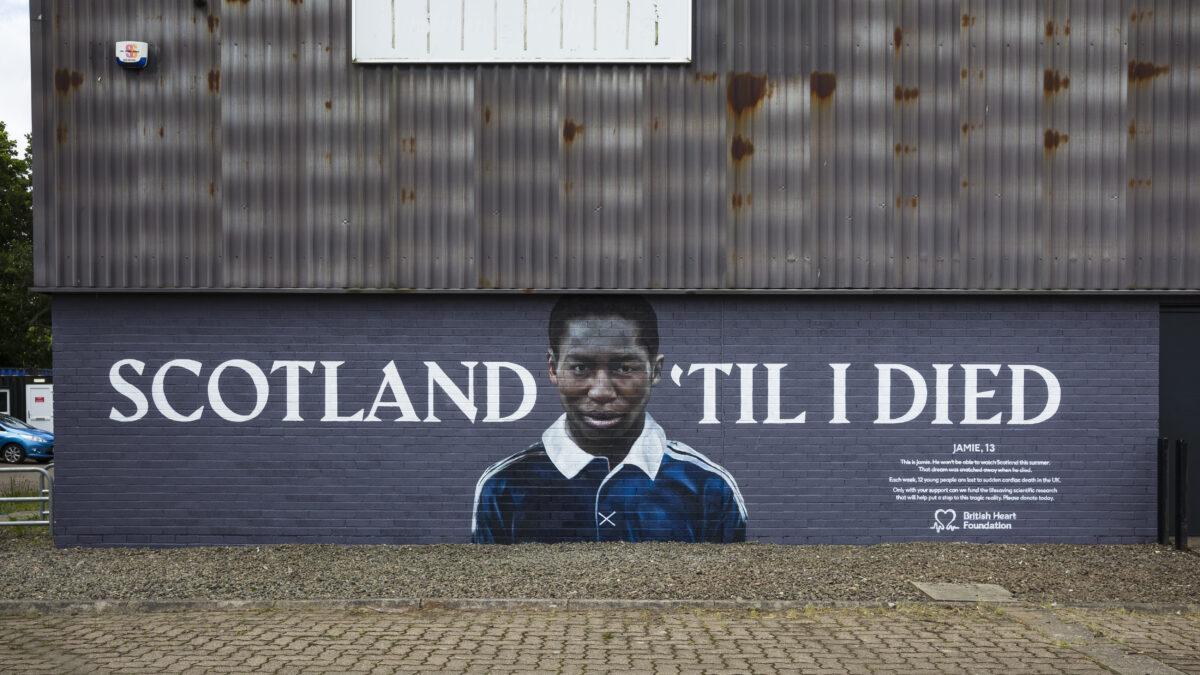
Just ahead of the Euros, in adland’s decadent year of sport, that’s the message of Saatchi & Saatchi’s ‘Til I Died campaign with the British Heart Foundation – which everyone in adland seems to be talking about this week, and with good reason.
Every day 13 babies are born with a heart defect. It’s not something typically we talk about – perhaps because it’s easier to think about that which we can change with diet and lifestyle than it is to think about the genetic or chromosomal causes of illness.
Not only does ‘Til I died shine a light on this unspoken issue, but it is also an exemplary display of how to use sports in storytelling more widely.
It’s the 12 hand-painted murals (by OOH production company Grand Visual) of fans in their England or Scotland shirts which makes the campaign so arresting.
After all, it is much easier to discuss an issue when we’re physically confronted with people’s passions, joys and sorrows, than when they’re a mere statistic. Indeed, scientists have found that stories we can relate to release oxytocin, which helps us pay attention.
Subscribe to Marketing Beat for free
Sign up here to get the latest marketing campaigns sent straight to your inbox each morning
“We were briefed to change the perceptions of heart disease and to increase the sense of urgency around the cause. People tend to think it only affects the elderly, the overweight, the unfit. But the truth is, it can strike anyone, anywhere, any age, any time,” Saatchi & Saatchi’s senior creatives on the campaign, Ollie Agius and Pete Ioulianou, explain.
“The football chant ‘England ‘till I die’ was the key. Once we changed it to ‘died’, we knew we had something and that the Euros would therefore be the perfect time to launch, hopefully leading to more awareness.”
Being cross-generational is what gives sport, especially football, such power. Regardless of whether your shirt has three lions or eleven thistles on it, fandom is often passed down. Stained match guides and fraying scarfs tell a story loaded with emotion.
Murals have also always been used in football culture to pay tribute – and whether it is to celebrate Marcus Rashford in Wythenshawe Manchester, or to honour the Liverpool fans who were killed in Hillsborough and their families, they also tell a story about community.
For Agius and Ioulianou that spirit of commemoration is exactly what made murals the perfect choice for this particular campaign.
“It felt like the perfect match for the context of our message. Crucially, the care and the dedication taken to paint the murals by hand gives the 12 young people we’re commemorating, and their memory, the respect they deserve.”
The lavish lifestyle of footballers is often used to sell products – take Bukayo Saka and his new Nando’s sauce, Declan Rice and Müller Yoghurt, or (whether you call it a PR win or loss, it certainly got attention) Jack Grealish and Hellmann’s.
But look away from the flash cars, expensive trainers and lucrative collaborations, and football is the perfect vehicle to tell purpose-driven stories as well.
Norwich Football Club’s campaign with The Samaritans for World Mental Health Day last year was another tear-jerking example of telling a hidden but vitally important story in the context of football.
It showed two men attending the Canaries games celebrating and commiserating throughout the season – and highlighted the importance of checking in with nothing more than a football scarf and a lost smile.
Big brands like Nike and Adidas will always leverage football stories impactfully in their storytelling but non-profits need to do it even more and even better.
“Every pound spent on marketing is a pound not spent on scientific research, so we genuinely felt responsible to make this as impactful as possible to help drive donations,” say Agius and Ioulianou.
‘Til I Died particularly hit home for me because I am one of the lucky ones. I have a condition called mosaic Turner syndrome which can lead to being born with heart defects, sometimes severe. I was lucky, but it could have been me. And really it could be anyone.
That is why the passionate, collective spirit of football has the staying power to drum up support and further research, as well as tell a story that will hit hard outside of adland and far beyond this week.