Apple has been named the world’s most valuable brand for the second year in a row, according to the Kantar BrandZ Most Valuable Global Brands Report for 2023.
The tech giant has retained its place at the top of the charts with a Kantar BrandZ valuation of £697bn ($880bn) – almost £239bn ($302bn) ahead of its closest competitor, Google.
Google is closely followed by tech firms Microsoft and Amazon, with McDonald’s coming in at number five in the ranking, making it the world’s most valuable non-tech brand.
The total brand value of the world’s top 100 brands now stands at £5.5 trillion ($6.9 trillion) for 2023 – a 20% drop on 2022. Despite this decline, the top 100 overall index has maintained its long-term growth trajectory, with value increasing by 47% when compared with pre-COVID (2019) levels.
“This year’s results – despite the fall in aggregate value – are, in fact, a continuation of the long-term growth trend for brands, which began following the global financial crisis of 2008 and continued up until the start of the pandemic in 2020,” said head of Kantar BrandZ Martin Guerrieria.
“While the market has proved volatile and been greatly impacted by global macroeconomics, consumers’ view of brands has proved far more stable – the most valuable brands in the world remain as highly regarded as ever.”
Subscribe to Marketing Beat for free
Sign up here to get the latest marketing campaigns sent straight to your inbox each morning
Guerrieria said the lessons for brand owners and marketers remain clear, with “effective marketing investment and long-term thinking” proving vital to business’ growth prospects.
“Those brands consistently investing in establishing strong consumer connections are now much better placed to navigate the current volatile conditions and deliver a greater degree of resilience for their shareholders.”
The top ten: Kantar BrandZ 2023
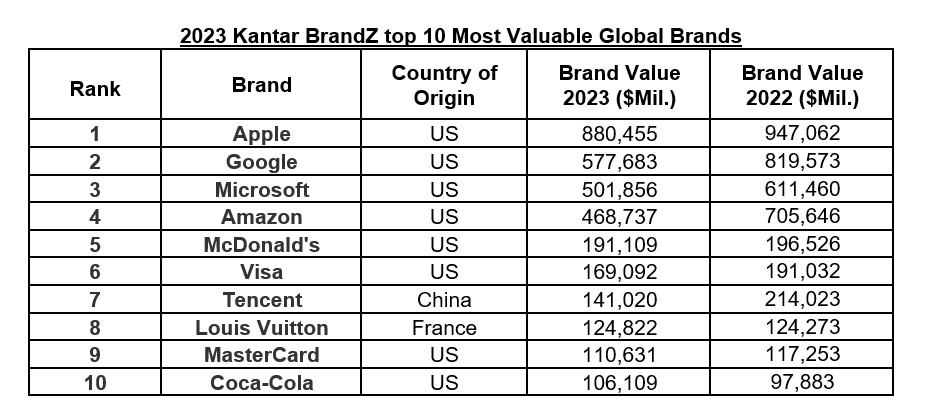
The food and drink, fast food and luxury categories proved the most resilient to market fluctuations across the board. In particular, Coca-Cola showed great resilience, increasing its brand value by 8% and breaking back into the top 10 for the first time in seven years.
In the fast food category, Burger King focused on offering a better experience and investing more heavily in brand communications, while luxury brands such as Louis Vuitton were able to leverage their assets and remain attractive despite steady, incremental price increases.
Brands which were able to justify higher prices than competitors – based on the strength of their equity with consumers – have added 67% to their brand value over the last four years.
In total, the Kantar data revealed that 16 brands grew in brand value across the top 100 – with Pepsi returning to the list after achieving significant growth with an increase of 17% year-on-year. Eight other brands also returned to the top 100, including Colgate, Sony and Pampers.
According to Guerrieria, brands need to continue investing in “brand-building, product and market diversification” in order to grow.
“This year’s results clearly show that, even in the current macroeconomic environment, it remains possible to find growth in any category and territory with the right strategy focused on establishing and maintaining strong connections with consumers,” he said.
“The Kantar BrandZ analysis proves that perceived difference is a key predictor of share growth; promoting any sense of difference and making it more known and more relevant to consumers will boost brand value in the long-term.”