Lovehoney calls out Google’s SafeSearch with step-by-step guide on how to disable it

AgenciesBrandsCreative and CampaignsNewsVideo

Lovehoney has launched a tongue-in-cheek campaign taking aim at Google’s SafeSearch feature, which the brand claims is preventing up to 250,000 consumers from accessing its products each month.

After registering over 600 complaints with the tech giant, Lovehoney has now released a step-by-step guide on how to disable the feature, ‘in the absence of education from the search engine itself’.

When active, the SafeSearch feature blocks what it considers to be ‘explicit’ results, and as such for businesses that deal in erotic aids like Lovehoney this can prove to be a significant hindrance to brand awareness and consumer recruitment.

With this campaign Lovehoney will hope to draw attention to the patchy implementation of SafeSearch, which Google rolls out to every user whose age it can’t determine – which according to LoveHoney is estimated to be up to a third of all users.

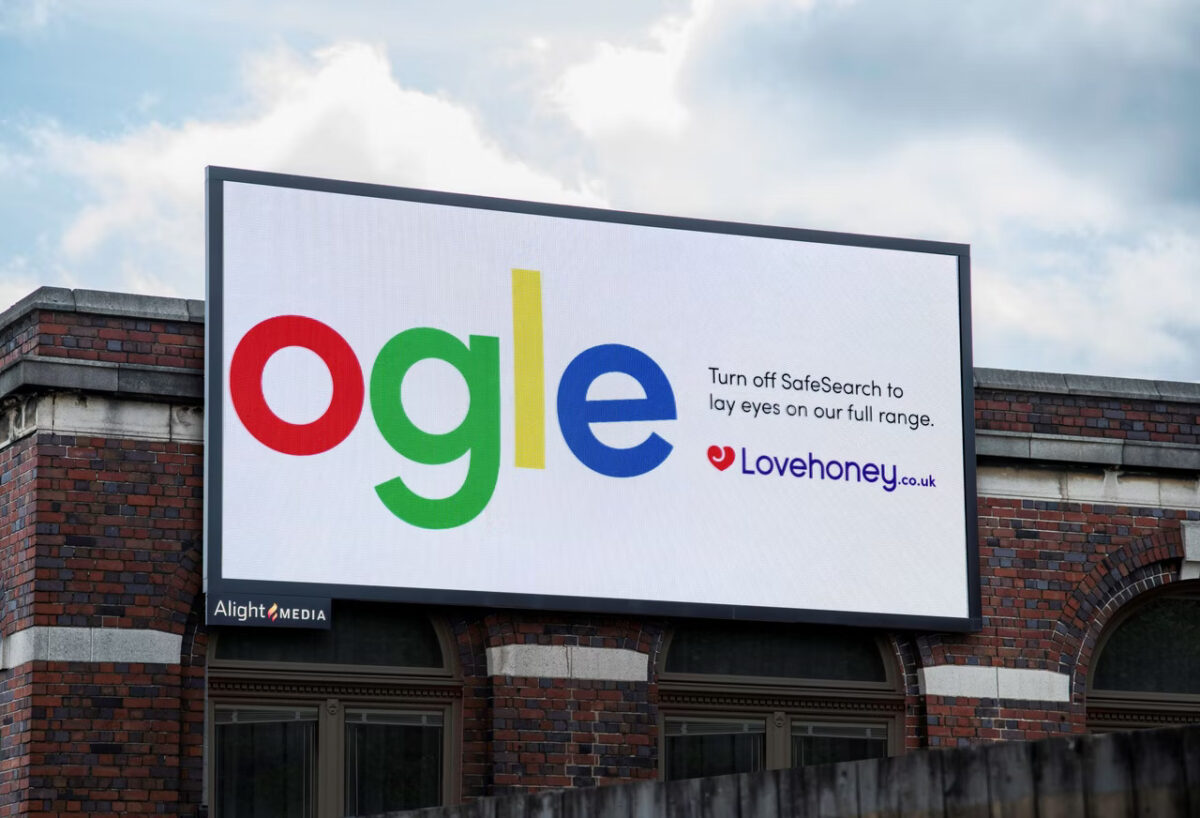
Earlier this year, Lovehoney worked with McCann’s Brimingham office to create a bold OOH display calling on customers to ‘OGLE’ its full range of products by turning off Google’s SafeSearch.

READ MORE: Google, TikTok and Tesco join UK advertisers’ workplace diversity initiative

“Although we are fully in support of Google’s SafeSearch feature for under 18s, there seems to be some clear inconsistencies that are ultimately harming sex-positive companies and the consenting adults that are trying to find products and information on the topic,” Lovehoney head of sexual empowerment, Johanna Rief said.

“Unfortunately, it is just another example of Big Tech treating sexuality as something that is sinful, while allowing actual harmful content to slip through the net.”

She added: “Having raised the issue countless times with Google and receiving little response, we felt that we had no choice but to create this instructional guide, particularly as there is such little information already out there, especially from the search engine itself.

“We hope to inform about the issue that is affecting our sector, while standing by our modus operandi, which is to help consenting adults achieve sexual happiness.”

Click here to sign up to Marketing Beat’s free daily email newsletter

AgenciesBrandsCreative and CampaignsNewsVideo

Lovehoney calls out Google’s SafeSearch with step-by-step guide on how to disable it

Social

SUBSCRIBE TO OUR DAILY NEWSLETTER

  • This field is for validation purposes and should be left unchanged.

Most Read

Lovehoney has launched a tongue-in-cheek campaign taking aim at Google’s SafeSearch feature, which the brand claims is preventing up to 250,000 consumers from accessing its products each month.

After registering over 600 complaints with the tech giant, Lovehoney has now released a step-by-step guide on how to disable the feature, ‘in the absence of education from the search engine itself’.

When active, the SafeSearch feature blocks what it considers to be ‘explicit’ results, and as such for businesses that deal in erotic aids like Lovehoney this can prove to be a significant hindrance to brand awareness and consumer recruitment.

With this campaign Lovehoney will hope to draw attention to the patchy implementation of SafeSearch, which Google rolls out to every user whose age it can’t determine – which according to LoveHoney is estimated to be up to a third of all users.

Earlier this year, Lovehoney worked with McCann’s Brimingham office to create a bold OOH display calling on customers to ‘OGLE’ its full range of products by turning off Google’s SafeSearch.

READ MORE: Google, TikTok and Tesco join UK advertisers’ workplace diversity initiative

“Although we are fully in support of Google’s SafeSearch feature for under 18s, there seems to be some clear inconsistencies that are ultimately harming sex-positive companies and the consenting adults that are trying to find products and information on the topic,” Lovehoney head of sexual empowerment, Johanna Rief said.

“Unfortunately, it is just another example of Big Tech treating sexuality as something that is sinful, while allowing actual harmful content to slip through the net.”

She added: “Having raised the issue countless times with Google and receiving little response, we felt that we had no choice but to create this instructional guide, particularly as there is such little information already out there, especially from the search engine itself.

“We hope to inform about the issue that is affecting our sector, while standing by our modus operandi, which is to help consenting adults achieve sexual happiness.”

Click here to sign up to Marketing Beat’s free daily email newsletter

AgenciesBrandsCreative and CampaignsNewsVideo

RELATED STORIES

Most Read

Latest Feature

Latest Podcast

Menu