Attention sells: Uber’s head of advertising on how brands can capture consumer eyeballs

Uber Advertising's Paul Wright discusses why attention is key in driving advertising profit, and why his firm's bespoke, non-intrusive placements work
BrandsFeaturesNewsWhy it Works

We live in a time when we are exposed to an almost constant level of advertising.

On our laptops, our phones, our TVs and even on public transport. In an environment like this, it isn’t hard to see how advertising has simply become background noise for many people.

And this is why modern advertisers have it harder than ever before, despite having so many more mediums to use, not to mention unparalleled tracking and personalisation options.

During a keynote speech at Advertising Week Europe in London, Paul Wright, Uber Advertising’s head of international, explained how capturing, and retaining the customer’s attention is absolutely crucial in this frenetic modern advertising landscape.

Why tailored ads are a win-win

As one of the world’s most prominent companies, Uber is well-placed to discuss the intricacies of the issue, and the innovations it has enacted over the last few years have helped its in-app advertising gain very successful levels of attention and tangible interest from its users.
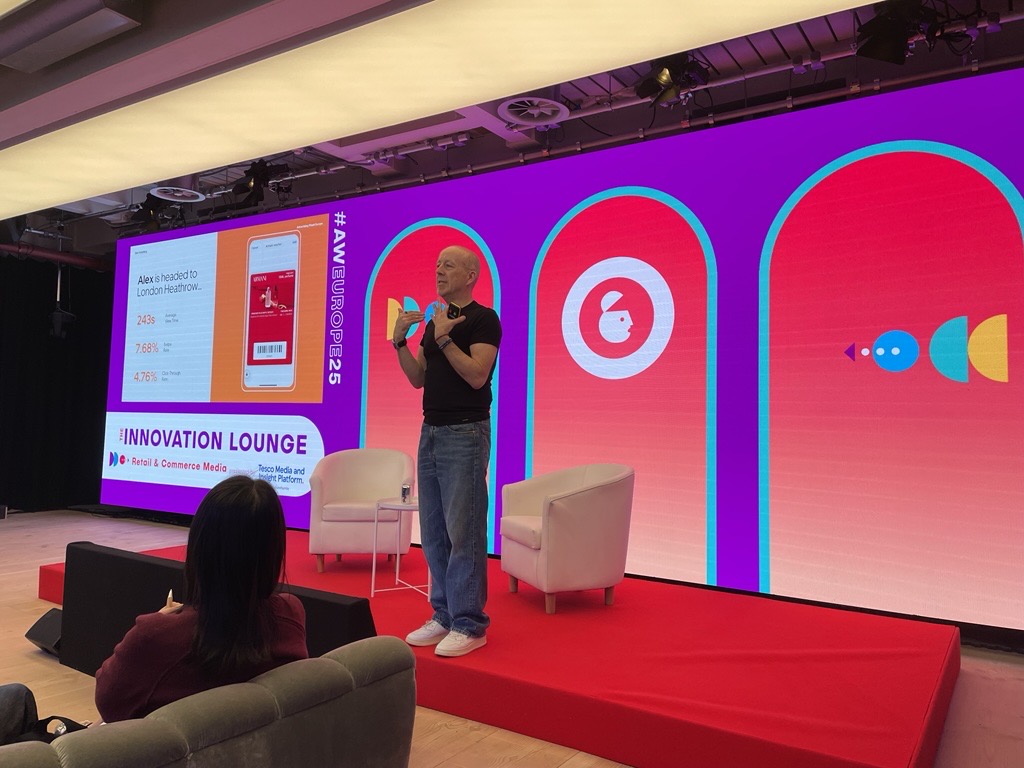
Uber’s Paul Wright at AWE 2025

According to Wright, Uber has achieved this by striving to make its own in-app ad experience as seamless as possible for passengers, minimising the intrusiveness and prioritising user experience above all, instead of blindly focusing on squeezing advertising revenue with indiscriminate placements.

As much as possible, the San Francisco-based outfit has sought to make its ads as personalised a part of the customer journey as it could, devising app-native placements closely related to the rider’s journey, interests and even the time of day.

“When we built the ad business, we wanted to make sure that the ads became native to the [customer] experience, because without that, attention is one thing, irritation is another thing, and our consumers need us to get to places and get food quickly,” Wright explained.

“They don’t want the ads to be in the way. So, what we’ve done is created an ads business which centres around native units that sit within the ads.”

The extent to which user experience is prioritised is crystalised when Wright reveals ads displayed before the driver arrives are non-clickable, and only become clickable once the rider has been picked up.

“We want to make it engaging for the user, because we don’t want people clicking out of the app and then losing their driver,” he said.

“The next unit, once you’ve got a car coming towards you, is a clickable unit, and also the one that when you’re on the ride itself is clickable.”


Subscribe to Marketing Beat for free

Sign up here to get the latest agency-related news sent straight to your inbox each morning


Measurement is key

Unsurprisingly then, grabbing and holding a person’s attention is key in such a deeply competitive environment. Tracking and measuring which placements and formats garner the most views and time on page is essential for marketers to understand what works and how it can be improved.

Wright reveals that like many other brands, Uber uses eye-tracking technology at the forefront of its attention measurement metrics, alongside the staples of click-through rates and time-on-page.

Eye-tracking technology is, however, paramount in discerning the psychology of the app’s user – which ads are most eye-catching, hold their gazer the longest as well as showing which journey people’s eyes take when using the app’s display.

According to Wright, capturing and retaining attention is an area in which Uber excels, thanks in no small part to years of carefully honing its in-app displays to make the experience as non-intrusive as possible.

“We asked ourselves, can we work out what this really means? Because we think we’ve got something here around attention, which is really powerful, but we need to have a measure of what that is,” he said.

“So, we focused on using Lumen’s technology, which uses a lot of eye tracking, to understand how your eyes are interacting with the app itself and its advertising units.”

“When we first got the data back, which showed our ads very unusually held attention for two minutes, we thought this is a really, really powerful starting point for understanding the attention we’re creating, and we have since begun to look into a range of other formats.”

Attention sells

It might seem like a no-brainer, but there’s a very good reason why Uber has invested so much time (and money) into crafting its advertising experience and measurements to grab every last millisecond of attention possible.

Eyeballs sell. And in a landscape where advertising has reached its most competitive point yet, any advantage counts. Wright explained the clear correlation between capturing attention and profit.

According to data gathered by the firm’s measurement partner Lumen Research, Uber’s tailored ad displays generated 5.5 seconds of attention per 1000 impressions, considerably higher than the 1.3 second average for mobile display.

What’s more, Uber’s ads garner an impressive £29.37 in incremental profit per 1000 impressions, highlighting the very clear benefit of bespoke, contextualised advertising.

“The data here. It is clearly exposed with our control group looking at the improvements in consideration based on usage of ads across the Uber app, resulting in a 27% uplift in consideration against other brands,” Wright explained.

As he concluded the London session, Lumen CEO Mike Follett adds: “A Ubiquity study saw that some media generate much more profit than other media. That’s the data point that they found. And so what we decided to find out is, how does that match on to attention, in general, and how does attention fit into profitability.”

“What we found is that attention almost exactly predicts profit. And I think that this is really important for us to understand, as an industry, about how important attention is in general, not just in driving profit, but that ensuring the content works successfully,” he added.

The evidence then, is very clear. Attention is a direct and driving force in helping advertisers and brands generate profit. And the best way to do it, is by creating bespoke, non-intrusive, personalised ad experiences for consumers, especially in the online sphere where the wrong approach can make them leave your app or website altogether.

As advertising and the data science behind it becomes ever more granular, holding on to eyeballs that split-second longer than a competitor could be what makes all the difference.


BrandsFeaturesNewsWhy it Works

Attention sells: Uber’s head of advertising on how brands can capture consumer eyeballs

Uber Advertising's Paul Wright discusses why attention is key in driving advertising profit, and why his firm's bespoke, non-intrusive placements work

Social

SUBSCRIBE TO OUR DAILY NEWSLETTER

  • This field is for validation purposes and should be left unchanged.

Most Read

We live in a time when we are exposed to an almost constant level of advertising.

On our laptops, our phones, our TVs and even on public transport. In an environment like this, it isn’t hard to see how advertising has simply become background noise for many people.

And this is why modern advertisers have it harder than ever before, despite having so many more mediums to use, not to mention unparalleled tracking and personalisation options.

During a keynote speech at Advertising Week Europe in London, Paul Wright, Uber Advertising’s head of international, explained how capturing, and retaining the customer’s attention is absolutely crucial in this frenetic modern advertising landscape.

Why tailored ads are a win-win

As one of the world’s most prominent companies, Uber is well-placed to discuss the intricacies of the issue, and the innovations it has enacted over the last few years have helped its in-app advertising gain very successful levels of attention and tangible interest from its users.

Uber’s Paul Wright at AWE 2025

According to Wright, Uber has achieved this by striving to make its own in-app ad experience as seamless as possible for passengers, minimising the intrusiveness and prioritising user experience above all, instead of blindly focusing on squeezing advertising revenue with indiscriminate placements.

As much as possible, the San Francisco-based outfit has sought to make its ads as personalised a part of the customer journey as it could, devising app-native placements closely related to the rider’s journey, interests and even the time of day.

“When we built the ad business, we wanted to make sure that the ads became native to the [customer] experience, because without that, attention is one thing, irritation is another thing, and our consumers need us to get to places and get food quickly,” Wright explained.

“They don’t want the ads to be in the way. So, what we’ve done is created an ads business which centres around native units that sit within the ads.”

The extent to which user experience is prioritised is crystalised when Wright reveals ads displayed before the driver arrives are non-clickable, and only become clickable once the rider has been picked up.

“We want to make it engaging for the user, because we don’t want people clicking out of the app and then losing their driver,” he said.

“The next unit, once you’ve got a car coming towards you, is a clickable unit, and also the one that when you’re on the ride itself is clickable.”


Subscribe to Marketing Beat for free

Sign up here to get the latest agency-related news sent straight to your inbox each morning


Measurement is key

Unsurprisingly then, grabbing and holding a person’s attention is key in such a deeply competitive environment. Tracking and measuring which placements and formats garner the most views and time on page is essential for marketers to understand what works and how it can be improved.

Wright reveals that like many other brands, Uber uses eye-tracking technology at the forefront of its attention measurement metrics, alongside the staples of click-through rates and time-on-page.

Eye-tracking technology is, however, paramount in discerning the psychology of the app’s user – which ads are most eye-catching, hold their gazer the longest as well as showing which journey people’s eyes take when using the app’s display.

According to Wright, capturing and retaining attention is an area in which Uber excels, thanks in no small part to years of carefully honing its in-app displays to make the experience as non-intrusive as possible.

“We asked ourselves, can we work out what this really means? Because we think we’ve got something here around attention, which is really powerful, but we need to have a measure of what that is,” he said.

“So, we focused on using Lumen’s technology, which uses a lot of eye tracking, to understand how your eyes are interacting with the app itself and its advertising units.”

“When we first got the data back, which showed our ads very unusually held attention for two minutes, we thought this is a really, really powerful starting point for understanding the attention we’re creating, and we have since begun to look into a range of other formats.”

Attention sells

It might seem like a no-brainer, but there’s a very good reason why Uber has invested so much time (and money) into crafting its advertising experience and measurements to grab every last millisecond of attention possible.

Eyeballs sell. And in a landscape where advertising has reached its most competitive point yet, any advantage counts. Wright explained the clear correlation between capturing attention and profit.

According to data gathered by the firm’s measurement partner Lumen Research, Uber’s tailored ad displays generated 5.5 seconds of attention per 1000 impressions, considerably higher than the 1.3 second average for mobile display.

What’s more, Uber’s ads garner an impressive £29.37 in incremental profit per 1000 impressions, highlighting the very clear benefit of bespoke, contextualised advertising.

“The data here. It is clearly exposed with our control group looking at the improvements in consideration based on usage of ads across the Uber app, resulting in a 27% uplift in consideration against other brands,” Wright explained.

As he concluded the London session, Lumen CEO Mike Follett adds: “A Ubiquity study saw that some media generate much more profit than other media. That’s the data point that they found. And so what we decided to find out is, how does that match on to attention, in general, and how does attention fit into profitability.”

“What we found is that attention almost exactly predicts profit. And I think that this is really important for us to understand, as an industry, about how important attention is in general, not just in driving profit, but that ensuring the content works successfully,” he added.

The evidence then, is very clear. Attention is a direct and driving force in helping advertisers and brands generate profit. And the best way to do it, is by creating bespoke, non-intrusive, personalised ad experiences for consumers, especially in the online sphere where the wrong approach can make them leave your app or website altogether.

As advertising and the data science behind it becomes ever more granular, holding on to eyeballs that split-second longer than a competitor could be what makes all the difference.

BrandsFeaturesNewsWhy it Works

RELATED STORIES

Most Read

Latest Feature

Latest Podcast

Menu