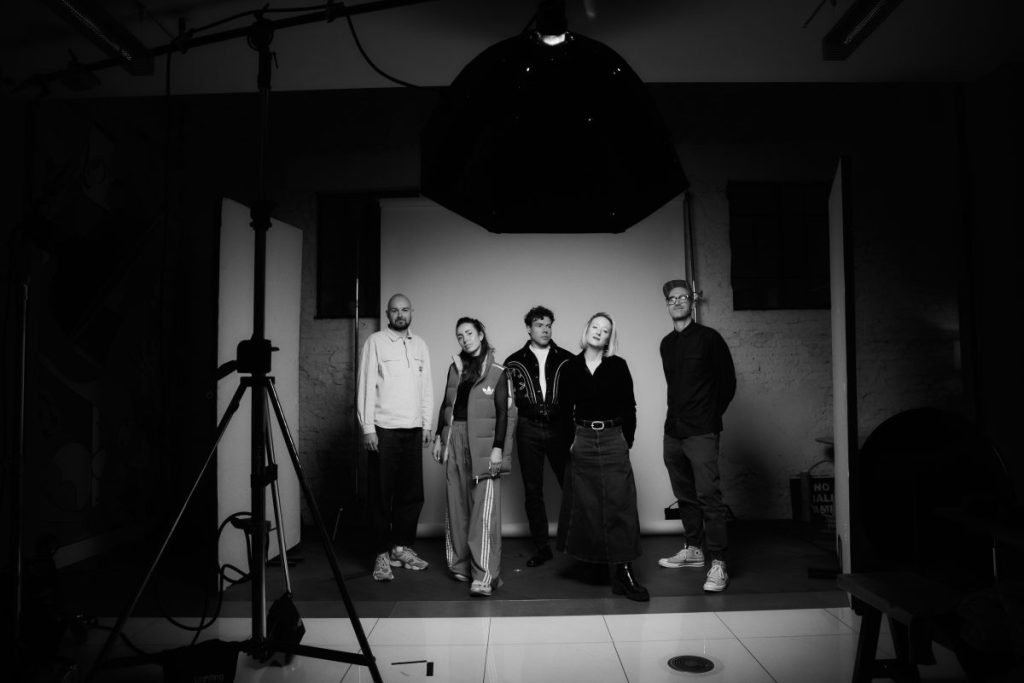
When Jo Bacon was named M&C Saatchi UK’s new CEO a little under a year ago, she joined the agency at a crossroads. Freshly re-structured under the leadership of Zaid Al-Qassab – who was only appointed in May last year – the group was clearly looking to do things a bit differently.
It’s no surprise then that the agency, which is the world’s largest independent creative network, has now unveiled a new strategy for “cultural power” ahead of its bold global rebrand as M+C Saatchi.
The fact this move comes ahead of the long-awaited Omnicom and IPG merger may just be pure coincidence, but if it can help supercharge M+C Saatchi at a time when the big holding groups are struggling with spiralling costs and cutting jobs by the thousands, it could catapult it, and its clients, to the forefront of cultural relevance.
Defining ‘cultural power’
Besides a jazzy new logo and spruced up branding, exactly what is cultural power? According to the agency itself, culture “is the driving force behind how people see, think, and act,” and to that effect, true cultural power would be the ability to shape perception and influence behaviours.
For the last 150 years or so, brands have invariably been at the forefront of culture – for better or for worse – driving societal change, variously improving and worsened living standards across the decades at the whims of their boardrooms.
Being the most efficient way for brands to communicate with the wider world, advertising has then been indisputably seminal in propagating the cultural and societal impacts of business. Brands like Guinness and Marks & Spencer would not have become the household names they are today had they not harnessed it to full effect.
As an advertising agency, and a sizeable one at that, M+C Saatchi therefore carries a great deal of cultural clout and plays a crucial role in helping its clients gain and extend their influence.
“Cultural power has always been more about telling our story, which we’ve already been doing in all our areas of business, in all of the ways that we work on all our brands, which has been to put them at the centre of culture,” Bacon explains.
“Being able to be responsive to culture in a moment, because you understand it from a comms and PR perspective, but you also understand it from a brand management strategy perspective, shows you the need to build long term strategies for brands that make them resonate and relevant.”
She continues: “We need to be able to do both right now, we need to be able to build long term brand strategies, but we also need [clients] to be able to have a conversation in the right moment and time in the right way.”
Subscribe to Marketing Beat for free
Sign up here to get the latest agency-related news sent straight to your inbox each morning
Righting the ship
Does the launch of this ambitious new cultural power strategy and brand revamp mark a clear break with the uncertainties faced by the agency over the past few years? “Yes,” says Bacon.
And it would certainly seem the case now, given M+C’s relatively stable performance for its range of flagship clients at a time when many, much bigger players, are struggling heavily against incessantly adverse economic headwinds.
Let us not forget that just over two years ago, the agency was almost bought out by Next15 Group to the tune of £310 million before the offer fell through. The departure of long-time CEO and member of the agency’s founding team Moray MacLennan several months did not boded well either.
Two years down the line however, and with the leadership of the likes of Zaid Al-Qassab and Jo Bacon, it would seem that the group is in a far better spot than it was.
“We’ve been very clear that the leadership team that’s been in place for over a year now, or just coming up for a year, is really clear about the future direction of the business; what we have within our capabilities, the originality of our positioning, the vision that we’ve got, and the clarity of the team that we’ve put together,” says Bacon.
“We are a really experienced, really capable, really brilliant team of people who’ve been brought together, particularly here in the UK – and putting that team of ‘Avengers’ together was the opportunity for lifetime, really, of building the future one of the most established brands in the UK and the world.”
Strength in agility
Although operating as a more than sizeable international outfit, M+C Saatchi is of course still independent (unlike sister agency Saatchi & Saatchi -from which it split in 1995 – which has since been subsumed into the Publicis machine) and as such is able to avoid much of the internal gymnastics and restructurings that often accompany being part of a large holding company.
As such – the impending absorption of IPG into Omnicom has left firms like M+C licking their lips. The larger the group, the slower the creative process. And in this industry you need to be nimble.
Which is precisely why Bacon believes that the scale of her agency’s reach, which is achieved while steadfastly maintaining its independence, is why it can offer clients something its juggernaut rivals simply cannot.
“I think from an M+C perspective it’s fantastic, because it’s reinforcing the fact clients have always got options as to which brands they go to and which agencies they want to work with, but our advantage has always been the scale of what we offer, because we’re the largest creative independent agency in the world.
“We have absolute strength in places like the UK, Europe, the Middle East, and the US, but we’ve also got a scale which allows us to be super nimble. And those mega businesses that are now being created, if you are a massive, global scale client, of course, it will add efficiency, but will they ever be able to be as nimble, agile and responsive to the way that brands need to operate in culture?”