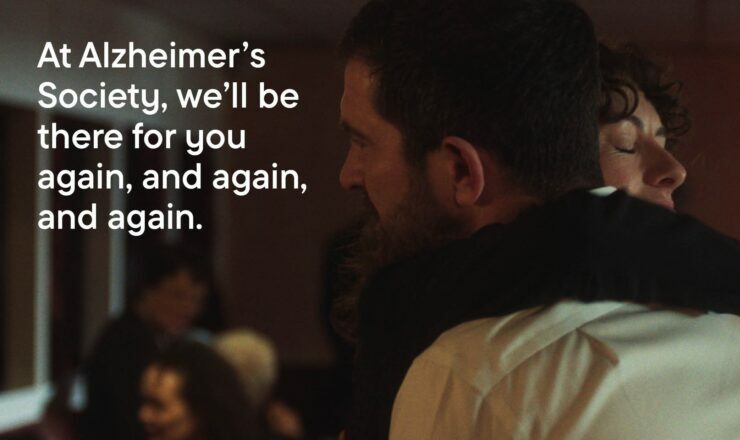
A series of ‘distressing’ adverts for the Alzheimer’s Society has avoided an outright ban from the Advertising Standards Authority (ASA), despite being the subject of hundreds of complaints.
The ads, created by New Commercial Arts, described a woman living with Alzheimer’s as dying “again and again and again”. More than 230 complaints were made to the ASA, accusing the ad of being “excessively distressing, offensive and irresponsible”.
The three TV ads and one radio spot ran in March and April this year. The ads featured a man talking at his mother’s wake, saying: “Mum first died on the 12th of May 2019 when she couldn’t work out how to prepare her legendary roast anymore.”
He went on to list a number of other times his mother had been unable to enjoy doing some of her favourite things, listing them all as times she had “died again”.
“She died again when she asked me, her son, what my name was. She died as dad’s rock after 52 years of marriage the day she looked straight through him.”
A voiceover reiterated the ad’s powerful message, saying: “With dementia, you don’t just die once. You die again and again and again.”
Subscribe to Marketing Beat for free
Sign up here to get the latest marketing news sent straight to your inbox each morning
In response to the complaints, the Alzheimer’s Society said it was conscious that a dementia campaign would be “sensitive and potentially challenging for some audiences”, adding that it “approached all aspects of the campaign with due care”.
The charity said that it believed it was “vitally important” to convey the core message of the ads, adding that it was not helpful to “shy away from highlighting the tough reality” of dementia.
The script was written by someone who had lost their father to Alzheimer’s 18 months previously, and so had personal experience of ‘the long goodbye’.
The ads were approved by ad clearance bodies Clearcast and Radiocentre, with the understanding that the ads would not be scheduled in programming that was likely to be seen or heard by children.
Clearcast said that while it understood the ads could be upsetting, it did not believe they were “irresponsible or exploitative”, instead describing them as “powerful and emotive” due to the seriousness of the subject.
The ads were part of the Alzheimer’s Society’s ‘The Long Goodbye’ campaign, designed to raise public awareness that dementia is the leading cause of death in the UK. The charity said that it was necessary to “bring dementia out of the shadows” and show people that they understood the brutal truths that lay behind it.
It also said the ads were an “honest depiction of the defining tragedy of dementia”, pointing out there was “nothing new or extreme” in the ads.
The ASA said that the ads – and particularly the references to death – were likely to resonate strongly with those living with or caring for someone with dementia and could cause a significant emotional impact with a wider audience.
It acknowledged that the ads, and particularly the references to dying “again and again and again” were likely to cause potentially significant distress to some people with Alzheimer’s, particularly to those who had recently been diagnosed.
However, it also considered that the ads presented an “accurate and sensitively delivered portrayal of the reality of the disease” and that “any distress caused was justified by the ads’ messages”.
Complaints about the Alzheimer’s Society ads were not upheld.
“For the reasons set out above we concluded that the ads were not irresponsible, did not cause serious or widespread offence, and did not cause unjustifiable distress.”