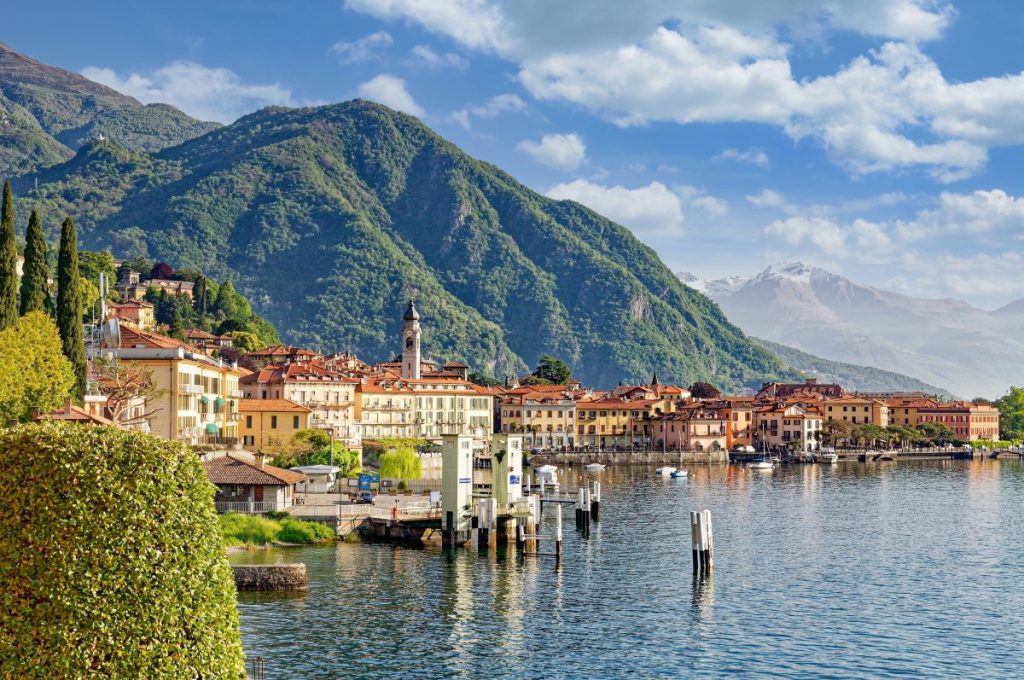
The travel industry has boomed since the Pandemic. Popular destinations like Tokyo and Rome are more crowded than ever, while influencers, and wannabe influencers alike, have flocked to places like Mykonos, Santorini and Lake Como.
At the same time, destinations are battling it out, trying to go viral. Thanks to social media, non-traditional holiday spots such as Albania and Bosnia and Herzegovina have seen an increase in tourists. Even Bali, a well-worn travel hotspot, owes its current popularity, in part, to social media.
In this landscape, it seems like creators and influencers have become more important to a travel brand than a traditional advertising campaign.
Kirsty Hathaway, executive creative director at Joan London explains: “Social media has opened up travel destinations to make the whole world feel accessible, but it also means that the world’s beauty is available through our screens, so it’s much harder for destinations to cut through as our eyes have seen it all.”
“What was once a beautiful picture of a gorgeous location is highly skippable today. As a result, storytelling and personal experiences are a key part of a travel marketer’s toolkit. British Airways’ campaigns have seen so much success because they capture this perfectly to show that they completely understand their audience,” she adds.
Oversaturation
So, what can travel brands do to stand out?
Lee Climpson, partner and production director at Transmission explains that “authenticity” is key.
“It’s not just about pretty beaches anymore, it’s the story, the vibe, the people. Show real experiences, not just glossy ads. Partnering with creators who live it and breathe it can cut through the noise,” he says.
“Keep it real and make it scroll-stopping. Gen Z wants short, punchy content, strong visuals and social proof. Sustainability and value matter too. Think memes, TikToks, behind-the-scenes. Stuff that feels human, not salesy.”
If authenticity is vital, what can brands do to ensure they resonate with audiences?
Hamish Day, client director at Dude London highlights that marketers “can’t play by the same rules”, that they once followed. 
Subscribe to Marketing Beat for free
Sign up here to get the latest agency-related news sent straight to your inbox each morning
“We faced this challenge a few months ago with our client WeRoad. We asked ourselves, what if instead of shouting what we have to offer, we try to be part of a relevant conversation for our target customers,” he says.
“We found out that for many, there’s so much more to travel. A recent case of this was “The Holiday Reaper” by WeRoad. Instead of promoting travel destinations, the group travel brand asked why people in the UK aren’t taking their annual leave, meaning these days are lost forever. This led us to creating a horror film that has little to do with the travel industry, allowing them to stand out by sparking a conversation.”
Changing habits
The way people travel has also changed, whereas previously consumers would pick a destination and then plan their itinerary, a growing percentage now choose an experience and plan their whole trip around that.
For example, consumers see a review on TikTok for a Sakura themed afternoon tea in Tokyo and then will book an entire trip just to be able to go to that experience. Of course this isn’t a new thing, people have been travelling for concerts and cultural events for years, but it is increasing.
Shaye Roseman, partner at Lippincott, explains: “So much research is happening on social media now. One interesting impact has been a complete inversion of the trip-planning funnel. It used to be that you picked a travel destination and then planned all the experiences and things you were going to do based on that location.”
“Now, specific experiences increasingly drive trip planning to destinations, rather than the reverse. People see something that captures their imagination on social media and that becomes the motivation for an entire trip,” he says.
Demographics
Changing demographics are also playing their part in the way travel is now marketed.
Roseman explains: “Millennials make up 31.5% of the world’s population, have an estimated $200 billion (£150 bn) of spending power, and take an average of 35 vacation days a year (the highest of any age group).”
This makes them a key demographic for travel marketers, who need to adapt to younger generations’ purchasing habits.
She adds: “Gen Z isn’t far behind though, and are rapidly emerging as a powerful cohort of independent travellers with strong preferences that are driving shifts within the industry, from how they discover and book experiences to what they prioritise to where they spend money.”
“As the first generation of digital natives, they are a generation that is actively redefining what it means to travel. And they mustn’t be overlooked.”
These younger generations also consider travel a priority. In fact, Roseman explains that around 61% of Gen Z and Millennials, surveyed by Credit Karma, reported that summer travel was high on their ‘to do list’.
While 38% of Gen Z and 39% of Millennials reported that, regardless of their finances, summer travel was a priority.