For most professional footballers, the limelight is intense but fleeting. Those several years of dizzying heights are often brought to a crashing halt as players find themselves barely into their mid-thirties with decades ahead of them.
Some will naturally wish to stay in the game that has given them so much, entering into coaching or managerial roles. And for the more business-minded perhaps even progressing into boardroom, or club ownership positions.
For many however, this won’t be the case, and this is why when promising commercial opportunities present themselves, players must seize and keep hold of them as they can offer lucrative supplemental incomes for years, and open doors to many other possibilities.
Aside from the obvious big names such as Cristiano Ronaldo, Lionel Messi and David Beckham, ex-pros such as Peter Crouch or Micah Richards, have been able to harness brand partnerships to great effect, boosting their public profile and gaining a range of media opportunities in the process.
Post-retirement security
If footballers earn so much, why is it important for them to find alternative revenue streams? In simplistic terms after all, they do earn obscene amounts of money compared to the rest of us, however their time at the top is short, and they have often spent much of their lives focusing on one very particular skill, sometimes at the detriment of any other development.
Which is why brands, and commercial partnerships with them are so important to footballers and many other elite athletes. Especially as opportunities dry up post-playing career if the coaching life isn’t for them.
Crouch and Richards are two very apt examples of this – neither it seems suited, or interested in a coaching career, both have instead excelled in the broadcast space and have managed to attach themselves to a range of household brands as a result.
Crouch at the moment it seems is impossible to get off our screens, appearing in ads variously for Ariel, Alpro and even Victorian Plumbing. Richards on the other hand has deeply ensconced himself within the We Buy Any Car pop culture machine with his easy charisma and dance moves.
“Players are more and more aware of the power and influence they hold to reach a global audience. Being a professional footballer in the modern era goes way beyond the pitch,” said Tom Gent, co-founder and head of creative at Founder Creative.
“Over the last 10 to15 years there has been a momentum shift, with a major surge in players getting behind multiple brand deals, and social media has played a major role in that. Players control their own channels, often reaching way beyond traditional TV broadcasters, and to the heart of the target audience.”
Subscribe to Marketing Beat for free
Sign up here to get the latest agency-related news sent straight to your inbox each morning
Star power = brand power
Naturally, global stars like Ronaldo, Messi and Beckham have been able to capitalise on their sporting fame to full effect, signing lucrative sponsorship deals throughout their playing careers with some of the world’s biggest brands.
Ronaldo and Messi, who are both still playing for Al-Nassr and Inter Miami in the Saudi and US top flights respectively, have astutely managed their astronomically successful careers to great effect in the commercial space – becoming two of the wealthiest footballers of all time.
Ronaldo’s net worth is currently estimated at a whopping £600 million, while Messi’s £490 million isn’t far behind, clearly illustrating the vital importance of brand deals and partnerships for elite athletes looking to secure an income beyond the pitch.
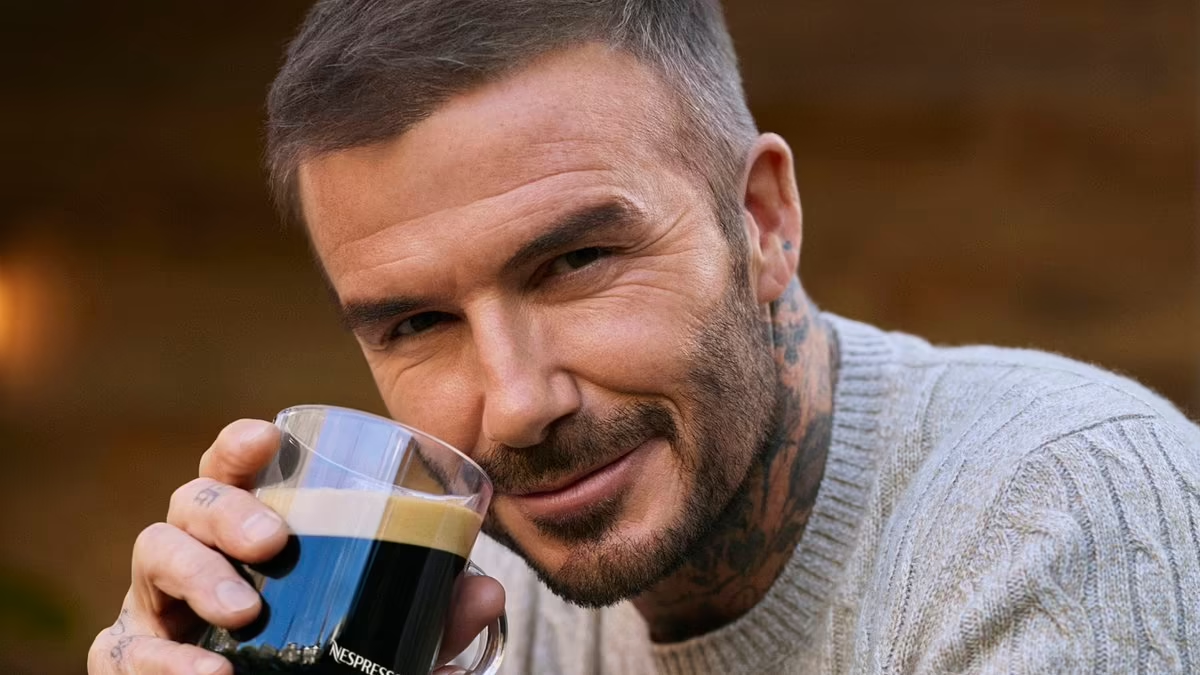
Closer to home, Beckham’s £340 million, amplified through brand deals with Calvin Klein, Nespresso and Adidas, might seem small in comparison, but it has enabled him to become the co-owner of Inter Miami, elevated his wealth and profile considerably.
Today’s elite athletes aren’t just competing—they’re building empires. Brand partnerships are no longer about slapping a logo on a jersey; they have become essential tools for unlocking cultural relevance, income streams, and long-term career impact,” said Sam Assim, M+C Saatchi Sport & Entertainment sport account director.
“The smartest athletes know it’s no longer just about sponsorship, it’s about strategy. Take Messi’s move to MLS: more than a transfer, it was a commercial masterstroke involving Apple, Adidas, and profit-sharing that positioned him as a stakeholder in the League’s future.”
Spotlighting why these partnerships are so sought after by advertisers, Re:act co-founder Tom Stone said: “What makes the approach so lucrative is brand equity. Messi and Ronaldo are aspirational figures, and advertisers value their association with success and excellence.”
“Their consistent social media presence further strengthens their brand, proving why investing in personal branding through advertising is not just smart, but essential,” he added.
Budding media empires
Brand deals and traditional advertising aren’t the only way that current and former players can market themselves however, with several stars establishing budding media empires anchored by TV broadcast careers and popular podcast series.
By leveraging his popularity both on the pitch and on TV in his 25 years as Match of the Day host, Gary Lineker has been able to supplement his BBC income with his frequent appearances in Walkers Crips campaigns, but also via his rapidly growing podcast empire – which is funded by big-name brand sponsorships, with Guinness currently holding the lead partner spot.
Former Manchester United captain Gary Neville has also been able to leverage his TV career into an expanding media and marketing presence, having led efforts to introduce MADFest to northern audiences earlier this year; whilst Crouch – despite his often slapstick advertising antics – has crafted a very respectable, and profitable podcast series which now boast legions of fans and is proving very attractive to advertisers.
“With this increased awareness of their personal brands, players are now often looking ahead and beginning to build and plan for life after football. Peter Crouch and his podcast and Gary Neville with his production company are good examples here in the U.K,” Gent continues.
“Cristiano Ronaldo’s YouTube channel became the fastest ever to hit 1m subscribers when it launched back in August, establishing what is effectively his own TV channel for longer form content as he looks beyond his playing career.”
Stone said: “Messi and Ronaldo have mastered personal branding, using advertising to expand their influence beyond football. Both have signed lucrative endorsement deals with top brands, carefully aligning their personal image with these partnerships.”
“Their global appeal allows them to tap into a wide audience, increasing visibility and diversifying their income long after retirement.”
It’s clear then, that with the advent of football’s globalisation – brands and footballers have become inextricably linked, and in most cases it’s mutually beneficial, which is why savvy players will continue to leverage the appeal of their image to gain the most lucrative brand deals and in many cases, set themselves up for highly successful future media or business careers.