AI is undoubtedly set to become one of the defining technological advancements of our lifetimes, touted in some quarters as having potentially as much impact on society and ways of working as the Industrial Revolution some 250 years ago.
Bursting into the mainstream with the advent of OpenAI’s ChatGPT in November 2022, AI has already infiltrated practically every facet of our lives, from our work and leisure, to health and government.
Now with Labour’s ambitious plans to make the UK a future AI superpower, it would seem business has been given the green light to prioritise the technology’s top down implementation, despite the myriad concerns raised that it may end up taking people’s jobs across a whole range of sectors.
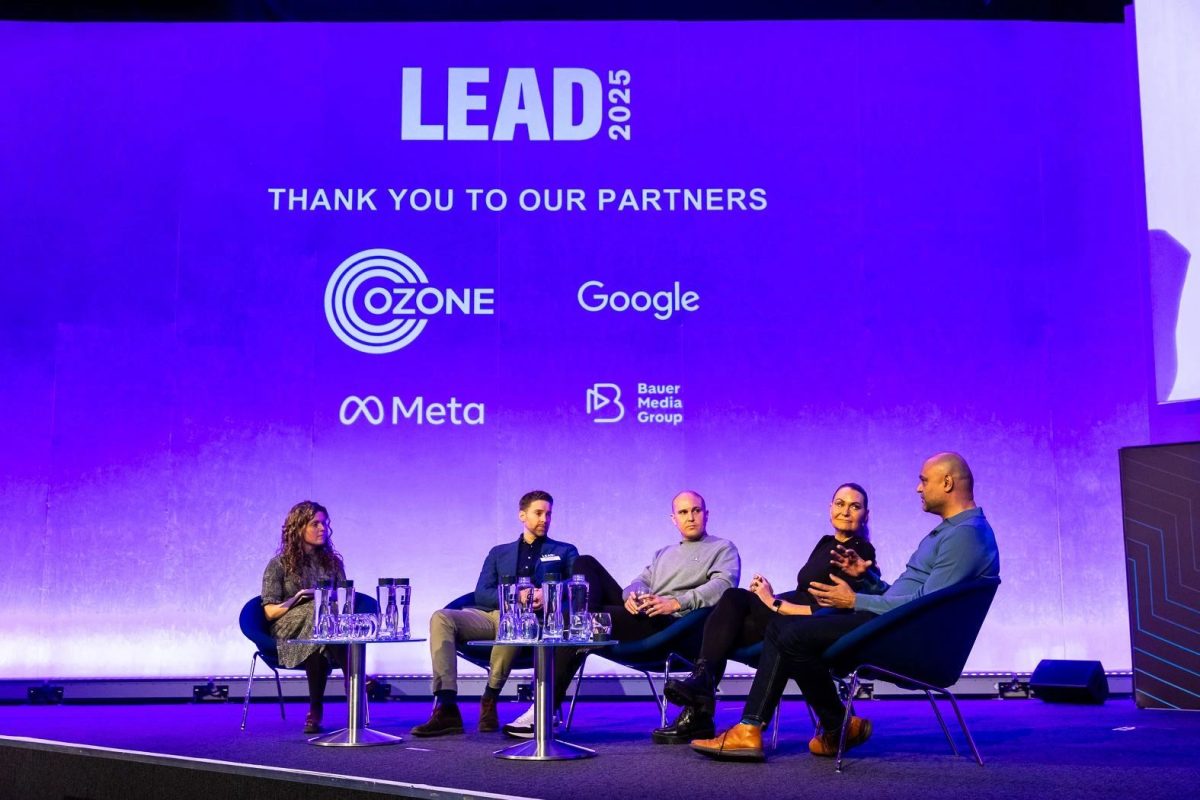
However, if you were to hear some of the marketing and advertising industry’s biggest names at the Advertising Association’s LEAD 2025 conference in Westminster this week, you might feel a bit more reassured – with the overarching message being adaptation, and not replacement.
Efficiency
It’s no secret that many in the industry can find themselves spending an inordinate amount of time trudging through mundane tasks, such as business reporting, endless data entry and asset creation.
AI could help with – and even manage – all of those tasks, with minimal human touch to guide it along the right path, thus freeing up an awful lot of time for marketers and advertisers to work on the aspects of the job they are truly passionate about.
Reckitt global director of data driven marketing and media, Sameer Amin estimates that at present as many as 40% of some junior marketers were spending time on business reporting, adding “that’s the type of stuff they shouldn’t be doing”.
“There were some marketers spending less than 4% of their time on campaign, origination and activation, 4% so suddenly they gave us some insights to go back to the board and say, look, we’ve got some really talented people here that kind of playing that position,” said Amin.
Creativity
Unsurprisingly, when workers are no longer bogged down by endlessly repetitive administrative tasks, they find themselves with a lot more time to focus on creative ideation – which is after all the bread and butter of a truly great campaign.
And AI can be helpful in this respect too, with Cadbury Equity’s head of marketing, Phil Warfield and Virgin Media O2’s marketing director, Simon Valcarcel spotlighting how the tech helped them develop immensely successful campaigns in 2024.
Celebrating its 200th anniversary, the confectionary giant created an AI-generated campaign that enabled the public to insert themselves into historic Cadbury ads. Shedding some light on the campaign, Warfield said: “We had almost 80,000 posters generated, around 50% opt in rate for data. And just as we said, qualitative in a sense, just really strong feedback.
“And that’s a real example of a campaign that if an agency would have come to us a few years ago and said we need to develop 80,000 personalized photos or posters, we simply couldn’t have done it.”
In an altogether different use of AI, O2 was able to create a ‘chatbot granny’ that uses the technology to keep phone scammers on the line for as long as possible, using her feigned confusion and computer illiteracy to tie up the fraudsters in knots, as Valcarcel explained: “It was more about raising awareness than anything else, as fraud is a massive issue for the telco industry. But ultimately, we see AI as a tool and not a strategy.”
Subscribe to Marketing Beat for free
Sign up here to get the latest agency-related news sent straight to your inbox each morning
Personalisation
Personalisation has become a bit of a buzzword within the industry of late, but there is good reason for that – time and time again it has proven indispensable for campaign success.
The only was brands can truly break free from the so-called ‘sea of sameness’ that seems to dominate a majority of modern marketing assets is to truly target consumers with content that is relevant and engaging for them.
And in this, AI has proven utterly revolutionary – allowing brands to produce thousands of diverse, personalised assets at the push of a button – much like Cadbury’s 200 years campaign.
Warfield explained: “You can use the algorithms to serve content in a hyper targeted way, and this has proven phenomenal for us in terms of generating three times the reach, a 25% increase in Q3 and also in overall campaign efficiency.”
Shifting priorities
Whatever 2025, and even the next decade holds for the use of AI in UK business, its impact is sure to be transformational, but its drawbacks do clearly need to be managed.
Notably, Amin reveals that there has been a need to shift priorities within Reckitt, with many of the heavy-duty admin tasks previously given to graduates now handled by AI, to some extent. He confirmed that this would not impact the amount of grad students hired, but that it certainly posed existential challenges for the future.
And this is also how AI should be viewed by both people and business, it will undeniably be a fantastic opportunity for British society, but will unfortunately have its fair share of deeply uncomfortable drawbacks.