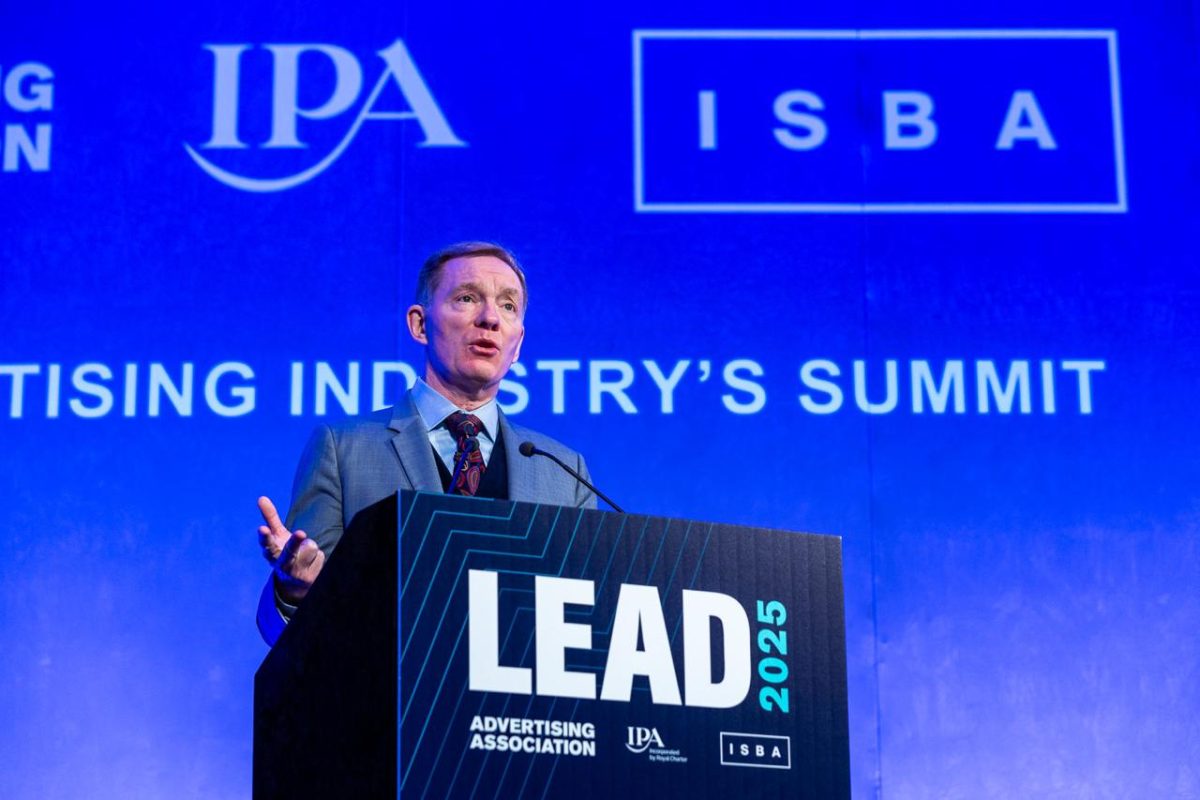
The Labour government will put creative arts at the heart of state education, said Sir Chris Bryant, minister of state for the department of culture, media and sport (DCMS), during in his keynote speech at this year’s LEAD Conference in Westminster.
Speaking before an audience which included some of the best and brightest from the advertising and marketing industries, Bryant pledged to do away with the so-called ‘STEM’ (Science, Technology, Engineering, Maths) educational system prioritised by the Conservative government over the last 14 years, instead introducing the new moniker ‘STEAM’ – in which arts will form a key pillar.
Pointing out that the UK was the second-largest exporter of advertising services globally, Bryant added that the creative industries is considered one of eight key sectors that the Labour government believes to be indispensable to the UK economy.
Highlighting the government’s clear interest in ramping up support for the sector, Bryant added: “We are the second largest [advertising exporter] in the world, and I think we could do a great deal more about boasting about that.
“Advertising is a very significant part of our economy, worth £21 billion of (gross value added) GVA in 2023 and on track this year for £43 billion of industry investment.”
He continued: “The single, most important thing to enable this industry to grow in the UK is to provide political, fiscal and economic stability in the country, so that people who make long term investments can know where they’re going.”
“The creative industries have a vastly significant economic role to play. One in 14 people in the UK works in the creative industries today, and we expect that to be 1 in 10 in a few years’ time.”
Subscribe to Marketing Beat for free
Sign up here to get the latest agency-related news sent straight to your inbox each morning
In order to better help the creative sector recruit and develop future talent, Bryant also revealed that Downing Street was set to ‘reform’ the apprenticeship levy from August this year which would include the option for six-month apprenticeships for young people to gain a broader, multi-faceted understanding of the industry.
He also touched on the government’s upcoming influencer marketing code of conduct (now on its fourth iteration), which is set to further clarify the rules and guidelines around practice; as well as the fledgling AI working group which is set to determine a clearer strategy for British industry’s adoption of the technology going forward.
Responding to Bryant’s address, Lisa Hayley-Jones, the Advertising Association’s director of policy and government affairs, said: “The Advertising Association was pleased to hear the Minister acknowledge the important role of our industry both domestically and through exports, with its rich offering of imagination and craft.
“The DCMS Minister shared his views that advertising’s success is fundamentally built on trust. We agree and our latest work shows that trust in advertising is on the rise, with more work being done to ensure the public has the very best advertising experience.”
She added: “We welcomed the Minister’s recognition of the importance of a creative education. There is a wealth of work being done by our advertising literacy programme, Media Smart, to help young people in schools up and down the country consider creative careers and create a steady stream of talent into our future industry.”