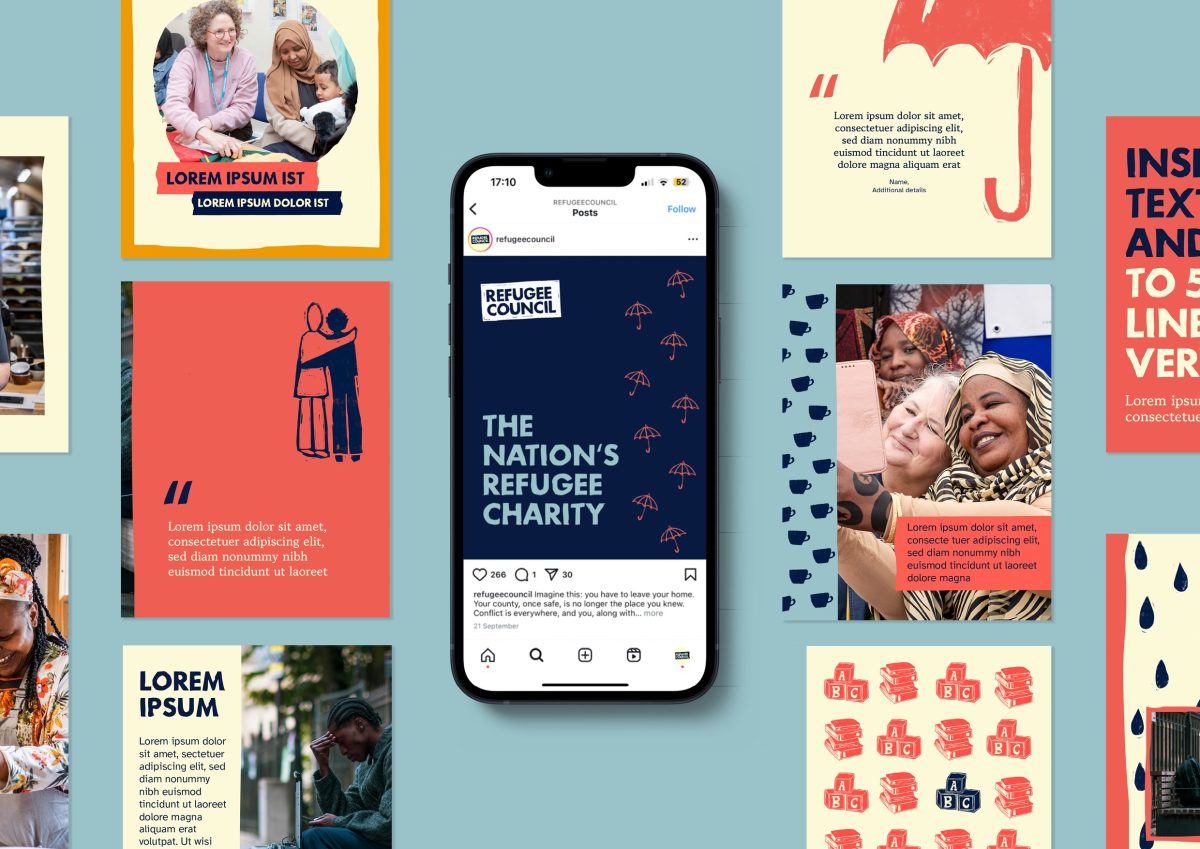
Human rights charity the Refugee Council has unveiled a new rebrand which aims to “champion a society” where refugees can thrive.
The rebrand, crafted by impact-first communications agency Shape History, aims to highlight that supporting marginalised communities doesn’t have to come at the cost of “alienating” broader audiences.
This comes as polling from the charity showed 71% of the British public believed the UK is more divided today than 20 years ago. It also showed that 69% of respondents are proud of the country’s role in supporting refugees since World War II.
The refresh leans into the Refugee Council’s heritage, having been founded shortly after the Second World War.
It challenges the media portrayals of refugees as a burden on a state, replacing the narrative with one of “hope, contribution, and shared values”.
Subscribe to Marketing Beat for free
Sign up here to get the latest agency-related news sent straight to your inbox each morning
Yusuf Ciftci, head of refugee involvement at the Refugee Council, said: “Branding is often perceived as something overly corporate and business-focused, which can feel distant to the refugee communities we serve. But having a brand that enables you to reach as much of your target audience as possible, is as vital for a charity as any company.
“As the charity’s head of refugee involvement, but also as a refugee myself, I was so pleased to see refugees playing a big role behind this rebrand: from helping make decisions on messages to testing them and even creating illustrations that are an important part of our new visual identity.
The charity’s refresh was created after numerous conversations and workshops with refugees and was inspired by the art of linocut printing. At the heart of the rebrand is the not-for-profit’s new brand line: ‘The Nation’s Refugee Charity’.
“Our aim was clear: craft a brand that felt as at home in Britain as refugees should be,” said Zoë Dawson, associate creative director at Shape History.
“This rebrand welcomes everyone – inviting the public into what is often a heated space, whilst making sure that refugees still see the charity as a friendly face to go to for support. It shows that brands don’t need to alienate one audience to connect with another, no matter how complex the issue.”