Behind the redesign with Monkey 47

AgenciesBrandsCreative and CampaignsFace to FaceFeaturesIn ProfileNewsWhy it Works

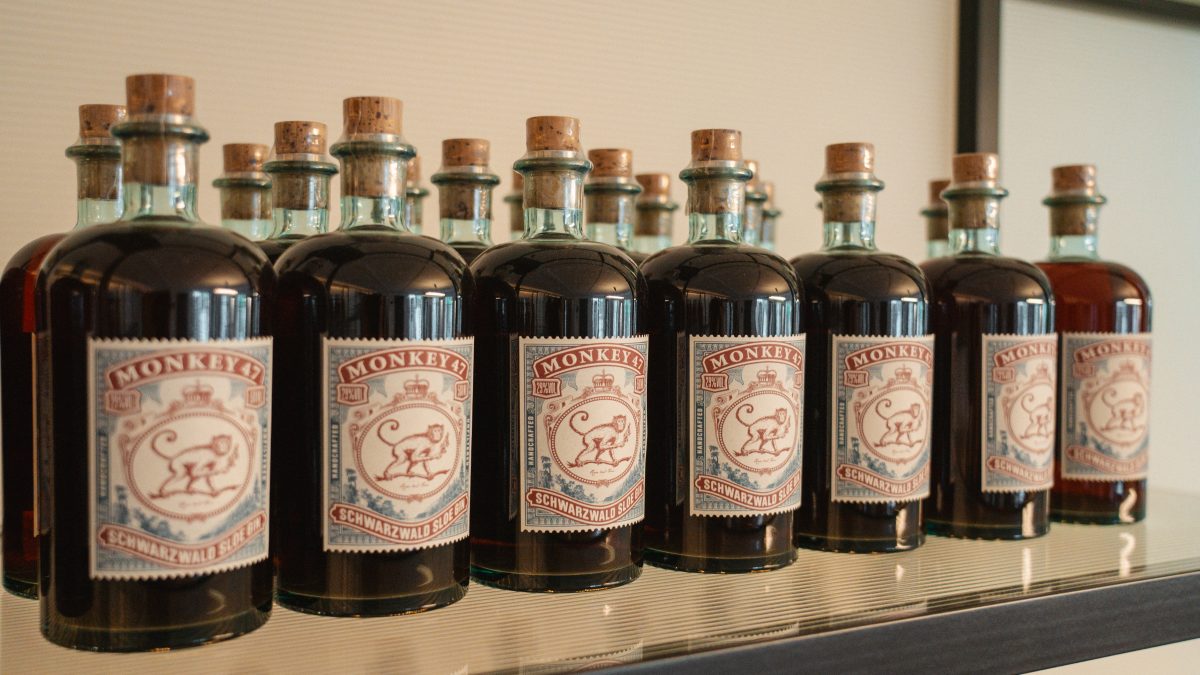
Black Forest gin maker Monkey 47 has undergone a refresh.

The rebrand, which will be rolled out across bars worldwide, celebrates the heritage and craftsmanship of the drinks it produces.

I headed to Germany to sit down with Lea Zobernig, the global marketing manager of Black Forest Distillers (owner of Monkey 47), to find why it was important for the firm to reposition itself in the highly competitive gin market.

“We wanted something that was inspired by our DNA. We always say, we’re rooted in the Black Forest, but there’s a level of eccentricity to the brand as well,” she said.

Monkey 47 was launched in 2010 by Alexander Stein after discovering the tale of British RAF officer Monty Collins and a monkey called Max.

The gin also takes its name from the 47 botanicals used in the recipe. The ingredients are placed in molasses and macerated for one day and two nights.

Brand Strategy 

The rebrand will tie into the firm’s marketing strategy going forward, Zobernig explained.

“Monkey 47 has built a very special brand identity and brand associations over the years. It’s a fairly young brand. We’re turning 15 this year,” she said.

“It helps us, fuelling this equity, continuing to grow that awareness, but in a specific way. We’re not a mainstream brand. We don’t want to be.”

Pernod Ricard became the exclusive owner of Monkey 47, having acquired a majority stake in 2016.

Zobernig said the rebrand was aimed at continuing building the “special brand identity”.

“It’s also about unexpectedness and continuing to reinvent ourselves as a brand whilst staying true to who we are, which is a delicate balance, because it’s not about reinventing yourself for the sake of it,” she explained.

Brand home manger Axel Klubesheidt shows Marketing Beat reporter Haylet Guest around the site.

“It’s just something that consumers have come to expect, that they’re getting something new.”

Partnership

Central to the refresh is the ‘Wunderbar’ wallpaper, designed by graphic designer Annie Atkins. The wallpaper takes its inspiration from William Morris’ designs.

“I think we were really drawn to Annie Atkins because she appreciated the brand and all its details,” Zobernig said.

“It’s this love for graphic design, everything we’ve done so far, and the importance of illustration. So, the partnership came about really naturally.”

Dublin-based Atkins is renowned for making paper props for period films, such as maps, posters and old newspapers.

She designed the map in the 2023 film Indiana Jones and the Dial of Destiny and has done other work for directors Steven Spielberg and Wes Anderson.

“The personality fit and the creative fit were really good as well (between the brand and Atkins),” said Zobernig.

“She came to the distillery and experienced the same tour that you got today, and some Black Forest activities to try and give her an appreciation for all that, that richness of local culture, but also the product and the brand.”

The firm provided Atkins with a brief but she was “the artistic director of the redesign”, explained Zobernig.

“I think she really understood the brand. Being a creative, she’s got a different approach to maybe a marketeer or brand manager, but it was very interesting. And we came up with some good work.”


Subscribe to Marketing Beat for free

Sign up here to get the latest agency-related news sent straight to your inbox each morning


Design

The new design replaces the previous jungle-inspired wallpaper.  It showcases the brand’s copper column stills, sometimes known as the Apparatus Alembicus Maximus, emerging from behind fir trees.

Customers can spot monkeys, stags, cuckoos, and the distillery’s resident Alpacas.

Zobernig explained that one of her favourite elements of the new wallpaper is the hero monkey, Max the Alchemist who is shown holding a Büchner flask.

According to Zoebernig, the feature “is reminiscent of the actual recipe and the idea that the brand likes to experiment”.

Another feature Zobernig liked were the Alpacas. While not native to the Black Forest, they can be found at the site and are representative of the brand’s eccentricity.

The wallpaper uses a muted colour palette to highlight its connection to the 47 botanicals used in the gin. And it’s not just a motif, Zobernig explained.

“We like real things, real ingredients, real people, real distillery,” she said.

“We like this idea of still having this wallpaper at the centre of it, [something] that can be put up in bars and pop-ups, but for super fans and consumers, they can actually bring it into their home if they want to.”

Brand home manager Axel Klubesheidt.

One of the major brand’s principles is that there is always a story to be found, and as such, the design was informed by stories.

Atkins did a deep-dive into the history of the Black Forest and found that Mark Twain visited the area in 1880.

He wrote of his visit: “You lose track of time in 10 minutes, and the world in 20.” This formed the basis of Atkins’ design.

Zobernig explained that some of the first sparks of inspiration for the wallpaper came from a visit to an abandoned nearby hotel.

Atkins was influenced by the many staircases found in the building and included the concept in the finalised design.

Another source of inspiration was the work of German author, Hermann Hesse. In particular, his quote: “To achieve the possible, we must attempt the impossible again and again.”

Part of Atkins’ design also takes inspiration from local folklore. The stag found on the print were taken from a local story of the animal escaping from a hunter by jumping over a gorge.

“I think, especially with the current environment, that it can be very doom and gloom, so it’s nice to invite people to escape a little bit, to get lost in stories,” said Zobernig.

“And I think to tell stories as well. That’s something that’s super important for the brand to talk about, wildly imaginative stories.”
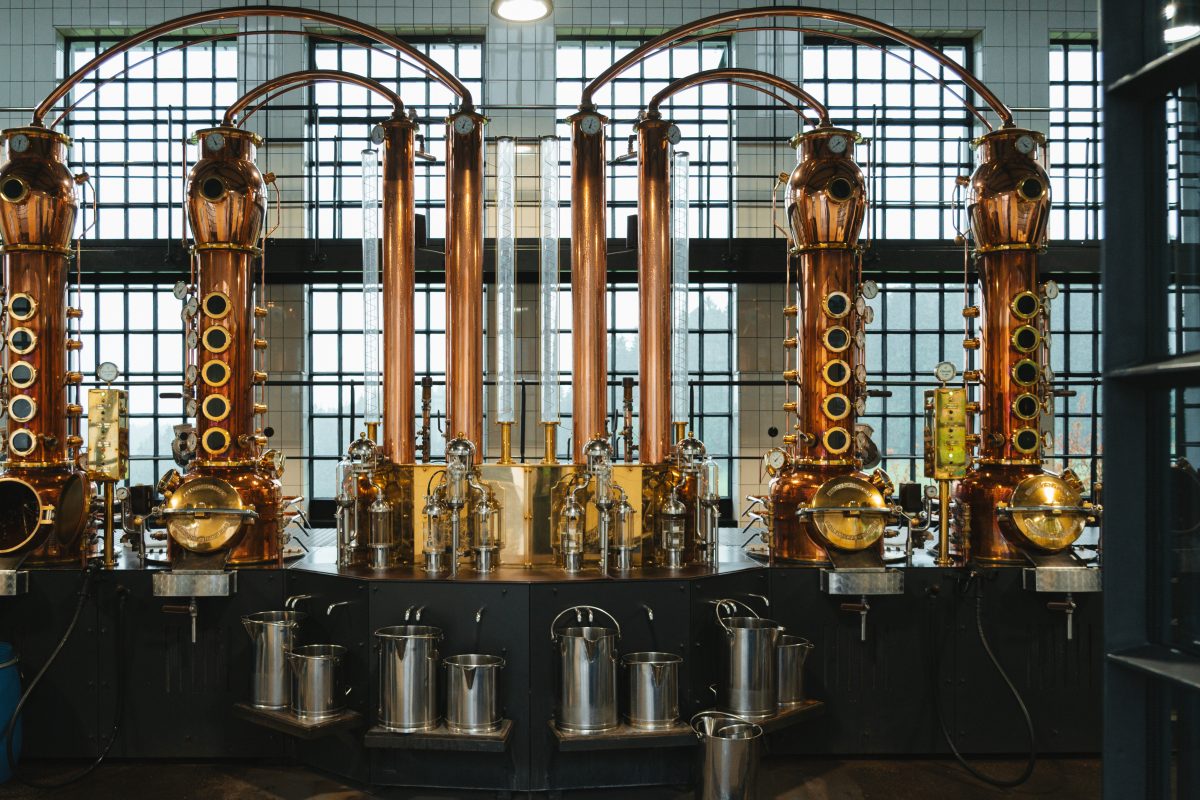
Black Forest gin maker Monkey 47 has undergone a refresh.

Consumers

It’s early days but the new design seems to have gone down well with the brand’s consumers as well.

“So far we’ve had really good feedback. It always takes a little while from launching something to actually getting in front of consumers, especially with Monkey 47 where the brand is very trade-focused,” said Zobernig.

“We’ve had positive reactions and excitement that it’s something new. I think that’s a bit expected as well from Monkey 47 to a degree. The brand keeps on reinventing itself, while staying true to what we are.”

Images: Axel Klubesheidt, Brand Home Manager


AgenciesBrandsCreative and CampaignsFace to FaceFeaturesIn ProfileNewsWhy it Works

Behind the redesign with Monkey 47

Social

SUBSCRIBE TO OUR DAILY NEWSLETTER

  • This field is for validation purposes and should be left unchanged.

Most Read

Black Forest gin maker Monkey 47 has undergone a refresh.

The rebrand, which will be rolled out across bars worldwide, celebrates the heritage and craftsmanship of the drinks it produces.

I headed to Germany to sit down with Lea Zobernig, the global marketing manager of Black Forest Distillers (owner of Monkey 47), to find why it was important for the firm to reposition itself in the highly competitive gin market.

“We wanted something that was inspired by our DNA. We always say, we’re rooted in the Black Forest, but there’s a level of eccentricity to the brand as well,” she said.

Monkey 47 was launched in 2010 by Alexander Stein after discovering the tale of British RAF officer Monty Collins and a monkey called Max.

The gin also takes its name from the 47 botanicals used in the recipe. The ingredients are placed in molasses and macerated for one day and two nights.

Brand Strategy 

The rebrand will tie into the firm’s marketing strategy going forward, Zobernig explained.

“Monkey 47 has built a very special brand identity and brand associations over the years. It’s a fairly young brand. We’re turning 15 this year,” she said.

“It helps us, fuelling this equity, continuing to grow that awareness, but in a specific way. We’re not a mainstream brand. We don’t want to be.”

Pernod Ricard became the exclusive owner of Monkey 47, having acquired a majority stake in 2016.

Zobernig said the rebrand was aimed at continuing building the “special brand identity”.

“It’s also about unexpectedness and continuing to reinvent ourselves as a brand whilst staying true to who we are, which is a delicate balance, because it’s not about reinventing yourself for the sake of it,” she explained.

Brand home manger Axel Klubesheidt shows Marketing Beat reporter Haylet Guest around the site.

“It’s just something that consumers have come to expect, that they’re getting something new.”

Partnership

Central to the refresh is the ‘Wunderbar’ wallpaper, designed by graphic designer Annie Atkins. The wallpaper takes its inspiration from William Morris’ designs.

“I think we were really drawn to Annie Atkins because she appreciated the brand and all its details,” Zobernig said.

“It’s this love for graphic design, everything we’ve done so far, and the importance of illustration. So, the partnership came about really naturally.”

Dublin-based Atkins is renowned for making paper props for period films, such as maps, posters and old newspapers.

She designed the map in the 2023 film Indiana Jones and the Dial of Destiny and has done other work for directors Steven Spielberg and Wes Anderson.

“The personality fit and the creative fit were really good as well (between the brand and Atkins),” said Zobernig.

“She came to the distillery and experienced the same tour that you got today, and some Black Forest activities to try and give her an appreciation for all that, that richness of local culture, but also the product and the brand.”

The firm provided Atkins with a brief but she was “the artistic director of the redesign”, explained Zobernig.

“I think she really understood the brand. Being a creative, she’s got a different approach to maybe a marketeer or brand manager, but it was very interesting. And we came up with some good work.”


Subscribe to Marketing Beat for free

Sign up here to get the latest agency-related news sent straight to your inbox each morning


Design

The new design replaces the previous jungle-inspired wallpaper.  It showcases the brand’s copper column stills, sometimes known as the Apparatus Alembicus Maximus, emerging from behind fir trees.

Customers can spot monkeys, stags, cuckoos, and the distillery’s resident Alpacas.

Zobernig explained that one of her favourite elements of the new wallpaper is the hero monkey, Max the Alchemist who is shown holding a Büchner flask.

According to Zoebernig, the feature “is reminiscent of the actual recipe and the idea that the brand likes to experiment”.

Another feature Zobernig liked were the Alpacas. While not native to the Black Forest, they can be found at the site and are representative of the brand’s eccentricity.

The wallpaper uses a muted colour palette to highlight its connection to the 47 botanicals used in the gin. And it’s not just a motif, Zobernig explained.

“We like real things, real ingredients, real people, real distillery,” she said.

“We like this idea of still having this wallpaper at the centre of it, [something] that can be put up in bars and pop-ups, but for super fans and consumers, they can actually bring it into their home if they want to.”

Brand home manager Axel Klubesheidt.

One of the major brand’s principles is that there is always a story to be found, and as such, the design was informed by stories.

Atkins did a deep-dive into the history of the Black Forest and found that Mark Twain visited the area in 1880.

He wrote of his visit: “You lose track of time in 10 minutes, and the world in 20.” This formed the basis of Atkins’ design.

Zobernig explained that some of the first sparks of inspiration for the wallpaper came from a visit to an abandoned nearby hotel.

Atkins was influenced by the many staircases found in the building and included the concept in the finalised design.

Another source of inspiration was the work of German author, Hermann Hesse. In particular, his quote: “To achieve the possible, we must attempt the impossible again and again.”

Part of Atkins’ design also takes inspiration from local folklore. The stag found on the print were taken from a local story of the animal escaping from a hunter by jumping over a gorge.

“I think, especially with the current environment, that it can be very doom and gloom, so it’s nice to invite people to escape a little bit, to get lost in stories,” said Zobernig.

“And I think to tell stories as well. That’s something that’s super important for the brand to talk about, wildly imaginative stories.”

Black Forest gin maker Monkey 47 has undergone a refresh.

Consumers

It’s early days but the new design seems to have gone down well with the brand’s consumers as well.

“So far we’ve had really good feedback. It always takes a little while from launching something to actually getting in front of consumers, especially with Monkey 47 where the brand is very trade-focused,” said Zobernig.

“We’ve had positive reactions and excitement that it’s something new. I think that’s a bit expected as well from Monkey 47 to a degree. The brand keeps on reinventing itself, while staying true to what we are.”

Images: Axel Klubesheidt, Brand Home Manager

 

AgenciesBrandsCreative and CampaignsFace to FaceFeaturesIn ProfileNewsWhy it Works

RELATED STORIES

Most Read

Latest Feature

Latest Podcast

Menu