Why out-of-home will never go out of style

MB examines how and why out-of-home continues to thrive and innovate in the face of rapid market fragmentation and technological advances.
FeaturesNewsThis Week in MarketingWhy it Works

To quote Mark Twain: “The reports of my death have been greatly exaggerated”. Whether or not anyone ever expected this famous line to be used in relation to out-of-home advertising is another matter entirely.

Regardless, it is very applicable to the sector’s current state of affairs. After all, just a few years ago many voices declared out-of-home advertising was dead and buried in the face of a rapidly changing industry – with one particularly pessimistic piece claiming that it was dying “by a thousand cuts”.

But this simply hasn’t happened. If anything, out-of-home has enjoyed spectacularly promising growth in recent years – with the UK market expanding 7.7% year-on-year in 2024 and generating £1.4 billion in revenue, its highest ever.

When examining the vast array of innovations brought about by the advent of digital out-of-home, such as 3D billboards and geo-localised ultra-targeting, it isn’t hard to see why investment is flooding in, it is a sector very much on the up and full of potential.

The Lazarus Effect

In the face of such robust competition and never-ending market fragmentation, why has out-of-home managed to remain so resilient in the face of what some might call more relevant, and more nimble mediums?

In simple terms, out-of-home is far more innovative and versatile than many people give it credit for. And the widespread emergence of digital out-of-home screens over the last two decades has supercharged the sector’s potential.

Perhaps the joint-oldest of the ‘legacy’ advertising mediums, alongside print, out-of-home was for a time dismissed as ‘outdated’ in the face of the endless adaptability of digital campaigns. But agencies have proven increasingly adept at quickly turning around hyper-relevant assets in recent years.

If anything, far from supplanting out-of-home, social media has helped to amplify it, while the constant innovation within digital out-of-home screens will ensure that the medium remains a relevant, and important pillar of advertising campaigns for many decades to come.
“OOH’s death was much exaggerated, other equally compelling options simply became more available. Effectiveness data shows time and time again that adding OOH into the media mix (particularly social) boosts ad recall,” said Josh Tilley, brand strategy director at Initials CX.

“Likewise, how it’s used in the customer journey is key, whether that be priming consumers at the start of that journey, or using positions near retailers to prompt salience, usage inspiration and consideration as we buy our groceries.”

Katy Hopkins, Iris ECD said: OOH has stayed relevant by evolving. There will always be room for great traditional posters as incredibly powerful, moving, emotive tools, but OOH has remained a key medium by embracing technology.

“OOH work has become more engaging and more interactive, connecting physical spaces with digital behaviours. It has the power to become part of the community, being a useful space in the neighbourhood or making public spaces more playful.”


Subscribe to Marketing Beat for free

Sign up here to get the latest agency-related news sent straight to your inbox each morning


Innovation, innovation, innovation

The versatility of traditional out-of-home and now the complete malleability of digital-out-of-home are absolutely key in unpicking why this sector has weathered any and all headwinds so well.

Digital out-of-home has opened a plethora of doors to sector specialists looking to create big things, and in recent years we’ve seen the normalisation of technology that would have seemed like something out of a sci-fi film only 30-odd years ago.

Visitors and travellers familiar with Piccadilly Circus will have by now become more than accustomed to eye-popping 3D billboards from the likes of Meta and H&M. While just last week, McVitie’s made use of hologauze technology to project giant renditions of its famous chocolate digestive onto London landmarks.

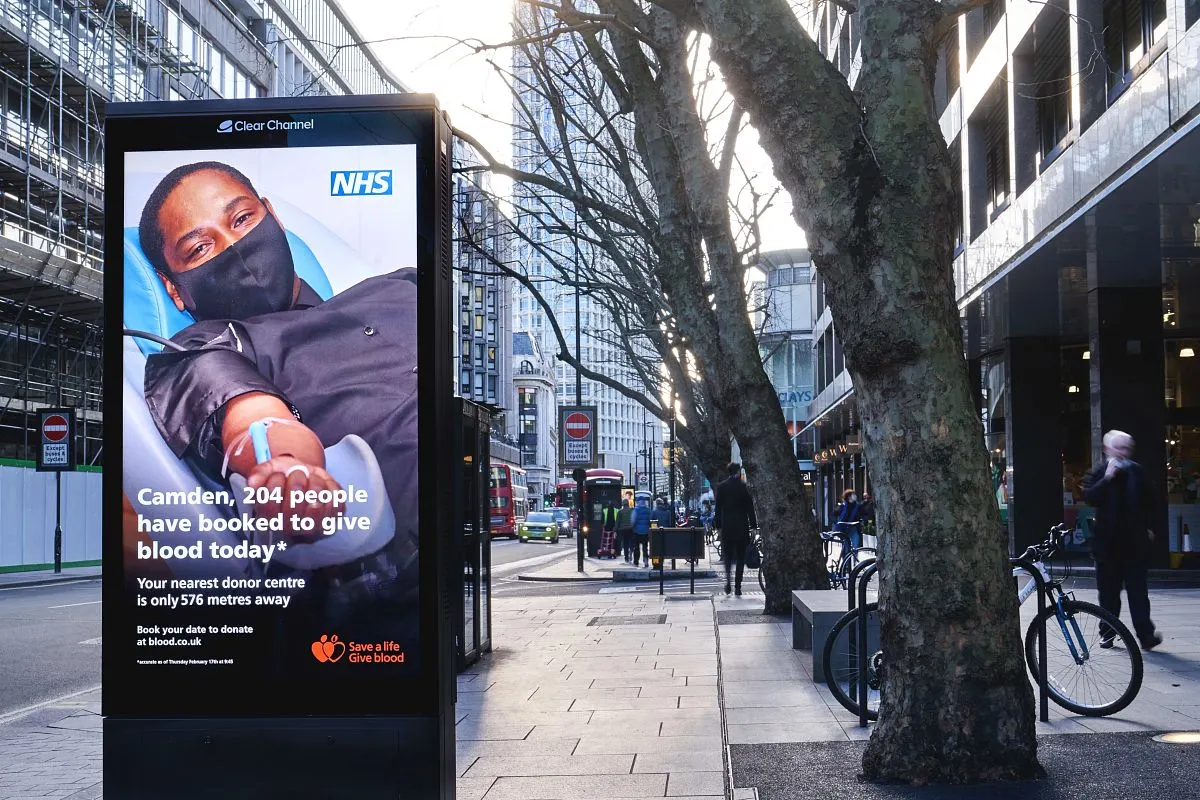
The possibilities for creative innovation are endless, and that’s without mentioning ‘smart billboards’ that can interact with passers-by and can be ultra-targeted and even weather-reactive. And of course, we can’t fail to mention Sure’s recently-unveiled ‘sniffable’ billboard for its new ‘intimate’ body spray.

“One of the biggest innovations in out of home has been how it’s now used as a springboard for wider digital campaigns. It’s no longer just about the billboard itself. It’s about what happens next,” said Tom Stone, co-founder of Re:act.

“Brands are activating OOH to gain cut-through on social, putting paid support behind it and driving real engagement. In many cases, it’s cheaper to activate, but far more impactful thanks to how it’s extended post-launch.”

Tilley continued: “Innovation is the reason why OOH remains buoyant, from immersive 3D billboards splashed across socials and gamified options which transform 48 sheets into extended smartphone screens, to AI-driven programmatic using live data to match messaging to moments in real time.”

Stopping power

So in an era dominated by ad avoidance and ad fatigue, where consumers are bombarded from all sides and all medium with endless content, why does out-of-home continue to retain such salience and cut-through with the public?

Screens can be turned off, web pages can be closed and TV and radio ads can be muted. Out-of-home placements however cannot. That billboard on the side of a road or building, the small ads on the train or the underground: it’s simply unavoidable.

And for the vast majority of us, we accept it as a fact of life – after all, (in the UK at least) its one of the more unintrusive form of advertising, it doesn’t disrupt or browsing, watching or listening.

Perhaps one the most valuable assets of out-of-home is that it is clearly present in public life. It allows brands and businesses to be relevant in a communal setting, not just on our private screens.
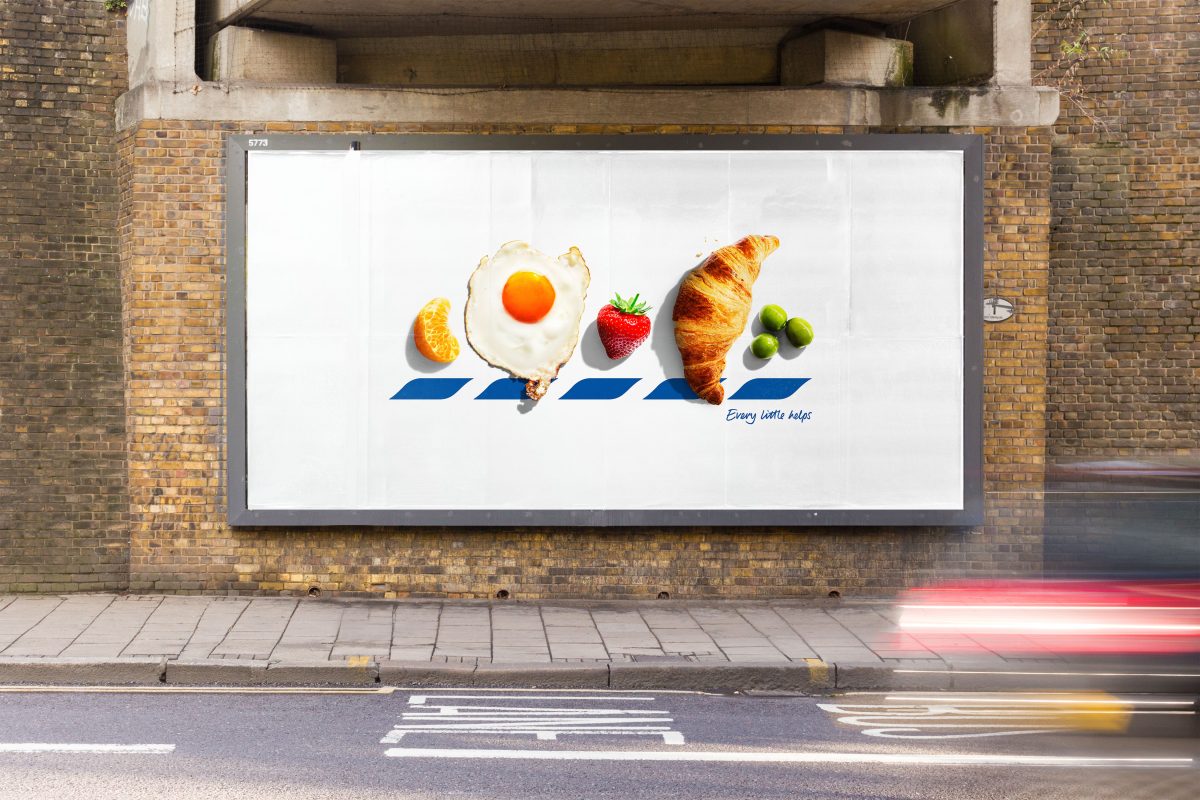
“OOH is one of the few formats that still has true stopping power. A massive, surreal installation on a city street feels bold, it makes a brand feel present in everyday life, not just in your feed,” said Georgina Bojarski, director of media at Buddy Media.

“But what really keeps it alive is its evolution. Today’s best billboards aren’t just static, they’re social. They spark conversations, TikTok’s and reactions. The magic lies in how physical space and social media merge. That fusion of real-world presence and online reach is what gives OOH its staying power.”

Tilley concurred. “In an age of increasing ad avoidance – where online pop-ups are blocked, TV ads are skipped, and streaming has diminished traditional digital media, classic OOH offers something rare: visibility that can’t be turned off, turned over or missed.

“As digital becomes saturated with noise, brands are turning to trusted, tangible media to cut through,” he said.

The unquestionable staying power of out-of-home and its sheer prominence in public life is what will continue to make it a pivotal asset within campaigns.

Out-of-home is a tried and trusted medium, for both advertisers and the public. It can help a brand project gravitas and scale to an audience that at times quite literally can’t look away.


FeaturesNewsThis Week in MarketingWhy it Works

Why out-of-home will never go out of style

MB examines how and why out-of-home continues to thrive and innovate in the face of rapid market fragmentation and technological advances.

Social

SUBSCRIBE TO OUR DAILY NEWSLETTER

  • This field is for validation purposes and should be left unchanged.

Most Read

To quote Mark Twain: “The reports of my death have been greatly exaggerated”. Whether or not anyone ever expected this famous line to be used in relation to out-of-home advertising is another matter entirely.

Regardless, it is very applicable to the sector’s current state of affairs. After all, just a few years ago many voices declared out-of-home advertising was dead and buried in the face of a rapidly changing industry – with one particularly pessimistic piece claiming that it was dying “by a thousand cuts”.

But this simply hasn’t happened. If anything, out-of-home has enjoyed spectacularly promising growth in recent years – with the UK market expanding 7.7% year-on-year in 2024 and generating £1.4 billion in revenue, its highest ever.

When examining the vast array of innovations brought about by the advent of digital out-of-home, such as 3D billboards and geo-localised ultra-targeting, it isn’t hard to see why investment is flooding in, it is a sector very much on the up and full of potential.

The Lazarus Effect

In the face of such robust competition and never-ending market fragmentation, why has out-of-home managed to remain so resilient in the face of what some might call more relevant, and more nimble mediums?

In simple terms, out-of-home is far more innovative and versatile than many people give it credit for. And the widespread emergence of digital out-of-home screens over the last two decades has supercharged the sector’s potential.

Perhaps the joint-oldest of the ‘legacy’ advertising mediums, alongside print, out-of-home was for a time dismissed as ‘outdated’ in the face of the endless adaptability of digital campaigns. But agencies have proven increasingly adept at quickly turning around hyper-relevant assets in recent years.

If anything, far from supplanting out-of-home, social media has helped to amplify it, while the constant innovation within digital out-of-home screens will ensure that the medium remains a relevant, and important pillar of advertising campaigns for many decades to come.

“OOH’s death was much exaggerated, other equally compelling options simply became more available. Effectiveness data shows time and time again that adding OOH into the media mix (particularly social) boosts ad recall,” said Josh Tilley, brand strategy director at Initials CX.

“Likewise, how it’s used in the customer journey is key, whether that be priming consumers at the start of that journey, or using positions near retailers to prompt salience, usage inspiration and consideration as we buy our groceries.”

Katy Hopkins, Iris ECD said: OOH has stayed relevant by evolving. There will always be room for great traditional posters as incredibly powerful, moving, emotive tools, but OOH has remained a key medium by embracing technology.

“OOH work has become more engaging and more interactive, connecting physical spaces with digital behaviours. It has the power to become part of the community, being a useful space in the neighbourhood or making public spaces more playful.”


Subscribe to Marketing Beat for free

Sign up here to get the latest agency-related news sent straight to your inbox each morning


Innovation, innovation, innovation

The versatility of traditional out-of-home and now the complete malleability of digital-out-of-home are absolutely key in unpicking why this sector has weathered any and all headwinds so well.

Digital out-of-home has opened a plethora of doors to sector specialists looking to create big things, and in recent years we’ve seen the normalisation of technology that would have seemed like something out of a sci-fi film only 30-odd years ago.

Visitors and travellers familiar with Piccadilly Circus will have by now become more than accustomed to eye-popping 3D billboards from the likes of Meta and H&M. While just last week, McVitie’s made use of hologauze technology to project giant renditions of its famous chocolate digestive onto London landmarks.

The possibilities for creative innovation are endless, and that’s without mentioning ‘smart billboards’ that can interact with passers-by and can be ultra-targeted and even weather-reactive. And of course, we can’t fail to mention Sure’s recently-unveiled ‘sniffable’ billboard for its new ‘intimate’ body spray.

“One of the biggest innovations in out of home has been how it’s now used as a springboard for wider digital campaigns. It’s no longer just about the billboard itself. It’s about what happens next,” said Tom Stone, co-founder of Re:act.

“Brands are activating OOH to gain cut-through on social, putting paid support behind it and driving real engagement. In many cases, it’s cheaper to activate, but far more impactful thanks to how it’s extended post-launch.”

Tilley continued: “Innovation is the reason why OOH remains buoyant, from immersive 3D billboards splashed across socials and gamified options which transform 48 sheets into extended smartphone screens, to AI-driven programmatic using live data to match messaging to moments in real time.”

Stopping power

So in an era dominated by ad avoidance and ad fatigue, where consumers are bombarded from all sides and all medium with endless content, why does out-of-home continue to retain such salience and cut-through with the public?

Screens can be turned off, web pages can be closed and TV and radio ads can be muted. Out-of-home placements however cannot. That billboard on the side of a road or building, the small ads on the train or the underground: it’s simply unavoidable.

And for the vast majority of us, we accept it as a fact of life – after all, (in the UK at least) its one of the more unintrusive form of advertising, it doesn’t disrupt or browsing, watching or listening.

Perhaps one the most valuable assets of out-of-home is that it is clearly present in public life. It allows brands and businesses to be relevant in a communal setting, not just on our private screens.

“OOH is one of the few formats that still has true stopping power. A massive, surreal installation on a city street feels bold, it makes a brand feel present in everyday life, not just in your feed,” said Georgina Bojarski, director of media at Buddy Media.

“But what really keeps it alive is its evolution. Today’s best billboards aren’t just static, they’re social. They spark conversations, TikTok’s and reactions. The magic lies in how physical space and social media merge. That fusion of real-world presence and online reach is what gives OOH its staying power.”

Tilley concurred. “In an age of increasing ad avoidance – where online pop-ups are blocked, TV ads are skipped, and streaming has diminished traditional digital media, classic OOH offers something rare: visibility that can’t be turned off, turned over or missed.

“As digital becomes saturated with noise, brands are turning to trusted, tangible media to cut through,” he said.

The unquestionable staying power of out-of-home and its sheer prominence in public life is what will continue to make it a pivotal asset within campaigns.

Out-of-home is a tried and trusted medium, for both advertisers and the public. It can help a brand project gravitas and scale to an audience that at times quite literally can’t look away.

FeaturesNewsThis Week in MarketingWhy it Works

RELATED STORIES

Most Read

Latest Feature

Latest Podcast

Menu