Six things we learned at AWE2025

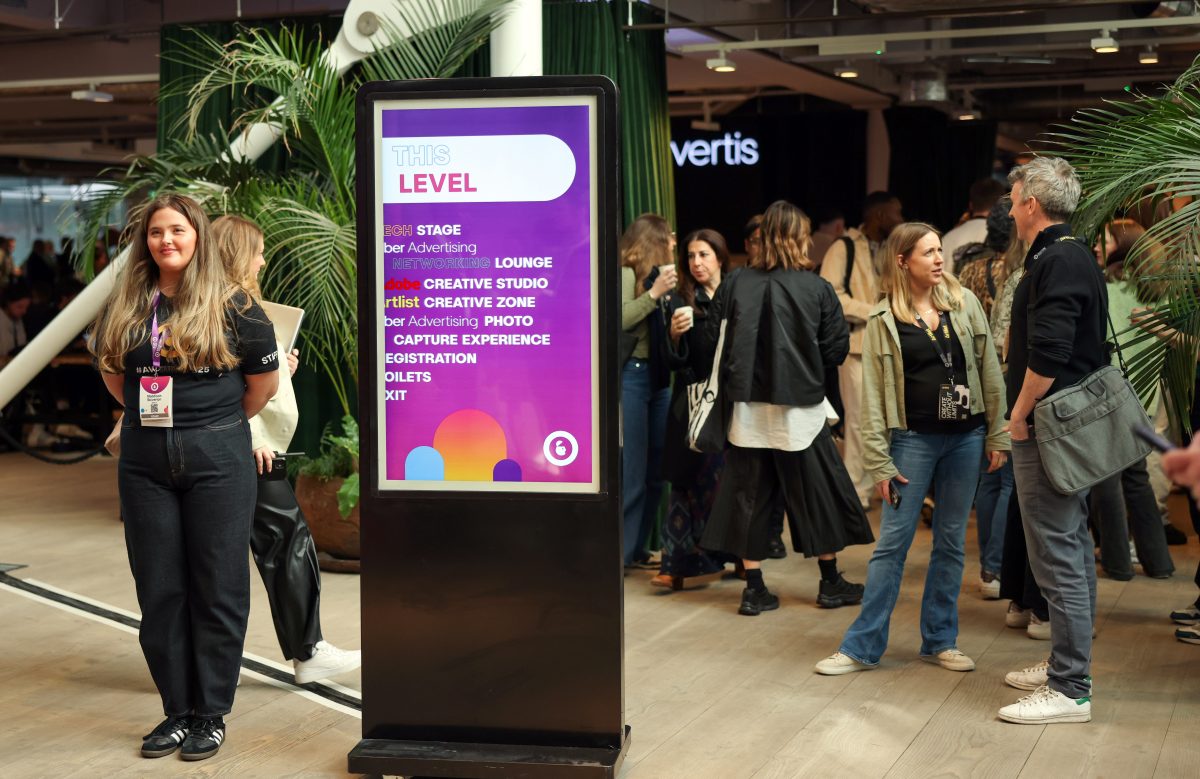
Crowds gather at Advertising Week Europe 2025
FeaturesNews

Advertising Week Europe (AWE) returned to London this week, with thousands of delegates from around the world descending on 180 Studios on the Strand.

The event saw talks from marketeers at some of the world’s biggest brands including; Amazon, Asda, Boots, Disney and Microsoft. It also included discussions with celebrities such as Gary Lineker, Davina McCall and Matt Lucas.

Covering all three days, the Marketing Beat team gathered six key takeaways that are set to shape the industry throughout 2025 and beyond.


Subscribe to Marketing Beat for free

Sign up here to get the latest agency-related news sent straight to your inbox each morning


How to avoid the dreaded ad fatigue, according to Uber

During one of the event’s opening keynotes, Paul Wright, Uber Advertising’s head of international, explained how capturing, and retaining, the customer’s attention is absolutely crucial in the modern advertising landscape.

Uber Advertising's head of international, Paul Wright
Paul Wright, Uber Advertising’s head of international.

In an increasingly digital world, individuals are bombarded with a constant stream of ads across formats every day. On their laptop, phone, TV and roadside, all before they walk through the office door and sit down at their desks.

Ad fatigue is inevitably a huge concern for marketers, so how do they avoid it?

According to Wright, Uber has sought to make its own in-app ads as seamless as possible for the user.

Minimising their intrusiveness as much as possible, the ride-sharing firm has sought to make its ads as personalised a part of the customer journey as possible – making them app-native and closely related to the rider’s journey, interests and the time of day.

“When we built the ad business, we wanted to make sure that the ads became native to the [customer] experience, because without that, attention is one thing, irritation is another thing, and our consumers need us to get to places and get food quickly,” Wright explained.

Adolescence: How the hit show can help stop toxic masculinity in advertising 

In a panel talk on Tuesday, BBD Perfect Storm MD Fernando Desouches and Getty SVP Rebecca Swift discussed how marketers can play a vital role in helping shape a new narrative about masculinity within the advertising industry.

BBD Perfect Storm MD Fernando Desouches and Getty SVP Rebecca Swift discussed how marketers can play a vital role in helping shape a new narrative about masculinity withing the advertising industry.
The panel discussed masculinity withing the advertising industry on Tuesday.

Speaking to Movember‘s Tom Ellis and Ipsos senior director of creative excellence Samira Brophy, the panel explored the complexities that young men face growing up today, with the Netflix show Adolescence acting as a catalyst for debate, with its writers even being invited to Downing Street earlier this week.

The panel said the best solution for marketers was to focus on more positive and inclusive representations of men within their content, helping young men and boys to see that true success shouldn’t be measured through the prism of figures such as (“self-proclaimed misogynist influencer“) Andrew Tate, but rather by encouraging the development of self-worth and strong relationships with family and friends.

“I think we’ve all got a job in terms of how we portray masculinity to kind of not point a finger at things which we want them to do and say: “look at that,” said Ellis.

“We need to actually make it the norm. And how do we do that is with our communications, when we’re working with influencers, by allowing people to show multiple versions of masculinity in a way which feels authentic.”

To wrap things up on day one, talent management agency YMU’s global commercial director Leo Harlow was joined on stage by two of TV’s biggest names of the past 20 years, Davina McCall and Paddy McGuinness.

Having fronted between them many of the biggest shows in TV entertainment, the pair highlighted the importance of building their personal brands through marketing partnerships with a range of businesses.

With both stars having begun their media careers long before the advent of social media, they have aptly pivoted their brands away from a TV-dominant landscape and have been able to harness the new medium to full effect.

Davina McCall famously became the face of Garnier Nutrisse hair colour products, elevating her own personal profile massively. While McGuinness authored and starred in a series of Greggs ads in the 2000s, which led to a direct 10% increase in sales, and his successful ad for On The Beach helped it break into the Irish market.

“That’s the sort of thing where sometimes you work with a brand and your clashing straight away – but you both want the same thing, you both want to be successful, but they might not see your idea,” he said.

“So if you can get in with a brand where you’re both on the same page, it not only makes life much easier, but the partnership will always be more successful.”

Jaguar: How controversy can be success

Jaguar launched one of the more controversial campaigns to come out of last year. The firm’s marketing director and Rawdon Glover, gave Advertising Week Europe an insight into why the car manufacturer rebranded and how it handled the initial backlash.
The initial teaser for its rebrand stirred up some “strong” feelings among audiences.
Feelings the brand wasn’t quite expecting, Glover said.
“Did we expect the scale of response? I don’t think we possibly could have done. You’ve got to remember that for Jaguar, we were becoming less and less relevant in today’s society.”
But the response told the brand that there was still a real sense of interest in car firms and that some people felt a real sense “of ownership” over them.

Disney: What lessons can brands learn from hit TV shows like Rivals

One of the highlights of Day 2 at Advertising Week Europe, Walt Disney Company’s senior vice president of advertising EMEA and country manager UK, Deborah Armstrong was joined on stage by actor Aidan Turner, producer Dominic Treadwell-Collins, actress Emily Atack and Curtis Brown, literary agent Felicity Blunt, to discuss what brands could learn from the recent hit show Rivals.

The session was hosted by Sam Glynne from UTA talent agency.

Based on the Jilly Cooper novel of the same name, Rivals was nominated for seven BAFTAs and has proved popular with all age groups, with clips from the show garnering 200 million views on social media platform TikTok.

Glynne explained that brands could take a lesson from Rivals.

“So to all you advertisers and brands in the room, I think you can all learn a lesson from a piece of IP that can travel across decades, still be relevant and create a moment in culture,” she said.

Armstrong explained to the delegates that the show provided its advertisers with the chance to “authentically integrate” into the world of Rivals.

André Spence, founder of Global Purpose Enterprise hosted a speed mentoring session at Advertising Week Europe 2025
Thursday’s speed mentoring session at Advertising Week Europe 2025.

The creative industry needs more mentors

Looking dapper in a red, wide-brimmed hat, André Spence hosted a high energy and informative speed dating session on Thursday morning to connect mentees with mentors.

During the hour-long event, 30 figures from digital media, content creation and entrepreneurship met with young people to share their insights into entering the industry.

Spence is the founder of Global Purpose Enterprise – “dubbed the Tinder for mentorship”. He told delegates 83% of creative talent lacks a mentor, costing the economy £24 billion annually.

As the session drew to a close he asked the panellists what had been the biggest obstacle to their success and how they overcame it.

They cited “brokenness” and “classism and social mobility”, but stressed the importance of parents and the support they can provide young creatives. 

Brand/celebrity partnerships, when done right, can be hugely beneficial for both parties

FeaturesNews
FeaturesNews

Share:

Six things we learned at AWE2025

Crowds gather at Advertising Week Europe 2025

Social

SUBSCRIBE TO OUR DAILY NEWSLETTER

  • This field is for validation purposes and should be left unchanged.

Most Read

Advertising Week Europe (AWE) returned to London this week, with thousands of delegates from around the world descending on 180 Studios on the Strand.

The event saw talks from marketeers at some of the world’s biggest brands including; Amazon, Asda, Boots, Disney and Microsoft. It also included discussions with celebrities such as Gary Lineker, Davina McCall and Matt Lucas.

Covering all three days, the Marketing Beat team gathered six key takeaways that are set to shape the industry throughout 2025 and beyond.


Subscribe to Marketing Beat for free

Sign up here to get the latest agency-related news sent straight to your inbox each morning


How to avoid the dreaded ad fatigue, according to Uber

During one of the event’s opening keynotes, Paul Wright, Uber Advertising’s head of international, explained how capturing, and retaining, the customer’s attention is absolutely crucial in the modern advertising landscape.

Uber Advertising's head of international, Paul Wright
Paul Wright, Uber Advertising’s head of international.

In an increasingly digital world, individuals are bombarded with a constant stream of ads across formats every day. On their laptop, phone, TV and roadside, all before they walk through the office door and sit down at their desks.

Ad fatigue is inevitably a huge concern for marketers, so how do they avoid it?

According to Wright, Uber has sought to make its own in-app ads as seamless as possible for the user.

Minimising their intrusiveness as much as possible, the ride-sharing firm has sought to make its ads as personalised a part of the customer journey as possible – making them app-native and closely related to the rider’s journey, interests and the time of day.

“When we built the ad business, we wanted to make sure that the ads became native to the [customer] experience, because without that, attention is one thing, irritation is another thing, and our consumers need us to get to places and get food quickly,” Wright explained.

Adolescence: How the hit show can help stop toxic masculinity in advertising 

In a panel talk on Tuesday, BBD Perfect Storm MD Fernando Desouches and Getty SVP Rebecca Swift discussed how marketers can play a vital role in helping shape a new narrative about masculinity within the advertising industry.

BBD Perfect Storm MD Fernando Desouches and Getty SVP Rebecca Swift discussed how marketers can play a vital role in helping shape a new narrative about masculinity withing the advertising industry.
The panel discussed masculinity withing the advertising industry on Tuesday.

Speaking to Movember‘s Tom Ellis and Ipsos senior director of creative excellence Samira Brophy, the panel explored the complexities that young men face growing up today, with the Netflix show Adolescence acting as a catalyst for debate, with its writers even being invited to Downing Street earlier this week.

The panel said the best solution for marketers was to focus on more positive and inclusive representations of men within their content, helping young men and boys to see that true success shouldn’t be measured through the prism of figures such as (“self-proclaimed misogynist influencer“) Andrew Tate, but rather by encouraging the development of self-worth and strong relationships with family and friends.

“I think we’ve all got a job in terms of how we portray masculinity to kind of not point a finger at things which we want them to do and say: “look at that,” said Ellis.

“We need to actually make it the norm. And how do we do that is with our communications, when we’re working with influencers, by allowing people to show multiple versions of masculinity in a way which feels authentic.”

To wrap things up on day one, talent management agency YMU’s global commercial director Leo Harlow was joined on stage by two of TV’s biggest names of the past 20 years, Davina McCall and Paddy McGuinness.

Having fronted between them many of the biggest shows in TV entertainment, the pair highlighted the importance of building their personal brands through marketing partnerships with a range of businesses.

With both stars having begun their media careers long before the advent of social media, they have aptly pivoted their brands away from a TV-dominant landscape and have been able to harness the new medium to full effect.

Davina McCall famously became the face of Garnier Nutrisse hair colour products, elevating her own personal profile massively. While McGuinness authored and starred in a series of Greggs ads in the 2000s, which led to a direct 10% increase in sales, and his successful ad for On The Beach helped it break into the Irish market.

“That’s the sort of thing where sometimes you work with a brand and your clashing straight away – but you both want the same thing, you both want to be successful, but they might not see your idea,” he said.

“So if you can get in with a brand where you’re both on the same page, it not only makes life much easier, but the partnership will always be more successful.”

Jaguar: How controversy can be success

Jaguar launched one of the more controversial campaigns to come out of last year. The firm’s marketing director and Rawdon Glover, gave Advertising Week Europe an insight into why the car manufacturer rebranded and how it handled the initial backlash.
The initial teaser for its rebrand stirred up some “strong” feelings among audiences.
Feelings the brand wasn’t quite expecting, Glover said.
“Did we expect the scale of response? I don’t think we possibly could have done. You’ve got to remember that for Jaguar, we were becoming less and less relevant in today’s society.”
But the response told the brand that there was still a real sense of interest in car firms and that some people felt a real sense “of ownership” over them.

Disney: What lessons can brands learn from hit TV shows like Rivals

One of the highlights of Day 2 at Advertising Week Europe, Walt Disney Company’s senior vice president of advertising EMEA and country manager UK, Deborah Armstrong was joined on stage by actor Aidan Turner, producer Dominic Treadwell-Collins, actress Emily Atack and Curtis Brown, literary agent Felicity Blunt, to discuss what brands could learn from the recent hit show Rivals.

The session was hosted by Sam Glynne from UTA talent agency.

Based on the Jilly Cooper novel of the same name, Rivals was nominated for seven BAFTAs and has proved popular with all age groups, with clips from the show garnering 200 million views on social media platform TikTok.

Glynne explained that brands could take a lesson from Rivals.

“So to all you advertisers and brands in the room, I think you can all learn a lesson from a piece of IP that can travel across decades, still be relevant and create a moment in culture,” she said.

Armstrong explained to the delegates that the show provided its advertisers with the chance to “authentically integrate” into the world of Rivals.

André Spence, founder of Global Purpose Enterprise hosted a speed mentoring session at Advertising Week Europe 2025
Thursday’s speed mentoring session at Advertising Week Europe 2025.

The creative industry needs more mentors

Looking dapper in a red, wide-brimmed hat, André Spence hosted a high energy and informative speed dating session on Thursday morning to connect mentees with mentors.

During the hour-long event, 30 figures from digital media, content creation and entrepreneurship met with young people to share their insights into entering the industry.

Spence is the founder of Global Purpose Enterprise – “dubbed the Tinder for mentorship”. He told delegates 83% of creative talent lacks a mentor, costing the economy £24 billion annually.

As the session drew to a close he asked the panellists what had been the biggest obstacle to their success and how they overcame it.

They cited “brokenness” and “classism and social mobility”, but stressed the importance of parents and the support they can provide young creatives. 

Brand/celebrity partnerships, when done right, can be hugely beneficial for both parties

FeaturesNews

RELATED STORIES

Most Read

Latest Feature

Latest Podcast

Menu

Marketing Beat has stopped reporting.

For retail Marketing insight please visit RG.

Retail Gazette