How Best for Britain’s ads shook up politics without a celebrity

Billboard reads The Tories The draw ends 4 July. Best for Britain marketing director Cal Roscow explains how the campaign group mixed emotion with data-driven tactics to reach 5 million people.
Creative and CampaignsFeaturesSocial Media

Taylor Swift’s endorsement of Kamala Harris is seen as a big push to drive young female voters to the Democrats in the United States. But what happens if you don’t have a glitzy global star with cowboy boots and friendship bracelets on side?

That was the case for pro-Europe movement Best for Britain. And the last election wasn’t just about the headline story of Labour’s win – it was about every single seat that was at risk of not being part of that story, be it from Reform or the split between the Liberal Democrats and Labour in seats where it was difficult to ascertain where the tide would turn.

Initially formed to campaign against Brexit, the group now concerns itself with obtaining closer ties with Europe with a view to the 2026 EU Trade Negotiations.

Although they are not officially aligned to any political party, the group felt a change of government was needed to achieve their aims.

Speaking to Marketing Beat, the group’s director of marketing Cal Roscow explains that they were closely observing trends, including the rise of Reform UK, and the success of independent MPs, which meant they were able to execute a carefully planned campaign when the snap election was announced.

While fellow group Stop The Tories was fronted by Carol Vorderman, Best for Britain didn’t have a figurehead with such mighty organic reach.

Despite this, the group hit in the right places. Its impact report shows that the Getvoting.org pages linked to Best for Britain for seats taken by Liberal Democrat and Labour from the Conservatives received a 118% and 33.8% respective boost in page views. In total Best for Britain campaigning reached 5 million people.

But how did they get there? The key, Roscow explains, was knowing when to tap into emotions and when to draw on data-driven mapping.


Subscribe to Marketing Beat for free

Sign up here to get the latest marketing news sent straight to your inbox each morning


The Can’t Wait campaign: hitting where it hits

Best for Britain articulates its message in a simple three point plan: 1. point out recommendations to the government 2. Change the government if they weren’t in favour of the recommendations 3. get the new government to work towards their aims by the 2026 UK and EU trade co-operation review.

Roscow explains that to help maximise the campaign’s results, the team created a set of emotive storylines related to the idea that people “can’t wait” for change.

“A lot of the work we do on the policy side is more complicated and technocratic, but we try to make the campaign side much simpler and more emotional where we can,” he says.

From the emotive story of a lady named Sandra who couldn’t wait for an ambulance, to a man named Frank waiting for universal credit, and the story of a young couple named Manny and Steph who are unable to save for a deposit, or a lady who is worried about crime.

Each video taps into a different public concern. “If you have children who are moving out and you’re worried about them buying a house then you might react to Manny and Steph’s story. If you’re someone who think more altruistically you might relate more to the story of Frank or Sandra,” Roscow explains.

Sandra’s story was based on real phone calls to ambulance services and was Roscow’s idea. It was so emotive that at first it was banned by Google.

“I was thinking about how can we draw more people in? And I thought sometimes we need a story that’s a bit sadder, a bit more shocking,” Roscow says.

“Yes it is emotive, but highlighted it was based on real calls.”

The Best for Britain team then worked with purpose-based agency Shape History to create further scripts. “We developed five which were really there to target left-leaning and progressive voters but we knew we needed the last three to really target floating voters,” Roscow adds.


@best4britain Julia can’t wait. We need a change of government. #juliacantwait #toriesout #generalelection ♬ original sound – Best for Britain

They used Google display ads to reach more than 786,000 people with 65,200 link clicks and each link cost just 3p. While on YouTube the Can’t Wait videos garnered half a million impressions and 353,000 engagements. 

‘Half art, half science’: fine-tuning targeting

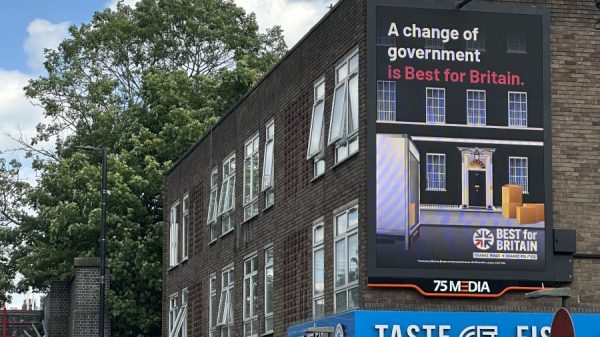
The out-of-home messaging was similarly broad. Some posters showed a pedestrian image of the front of Number 10 with the words “a Change of Government is best for Britain”, or “Is tactical voting green or Lib Dem here?”.

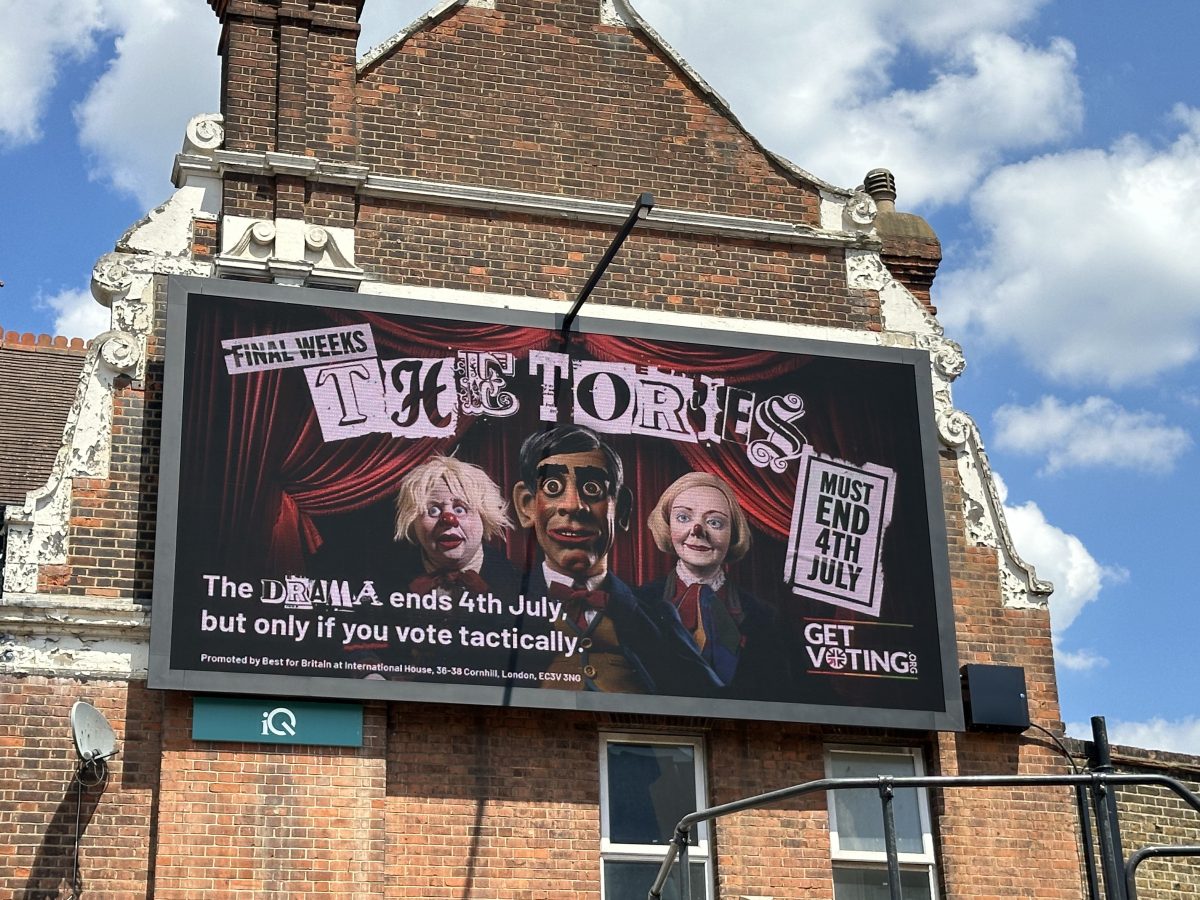
Meanwhile others showed mocking and puppet like photographs of former Prime Ministers Rishi Sunak, Boris Johnson and Liz Truss with a stage curtain and the words “The drama ends 4th July, but only if you vote tactically.”

Roscow also highlights that out-of-home allows swathes of passers by to see the message, whereas using Facebook data to target right can be a challenge in political advertising – if you get it wrong you get a sea of opponents in the comments.

Noting the importance of targeting campaigns correctly, Roscow explains that the team’s focus was on seats where their particular message could have the best impact.

“We were targeting by demographic and previous voting history. We did a lot of polling and research including multi-level and post-stratification research to gauge what people were going to say,” he adds.
Roscow highlights that despite many having voted Conservative at the last election, a lot of younger women in the North East expressed that they would vote tactically at the last election.

“All political campaigns are bad at speaking to and involving young women and most political organisations are likely to have more men on their database. If you can convey why people are struggling to get a doctor’s appointment for example that helps,” Roscow adds.

He says their “half art, half science” tactics stemmed from being a smaller team.

“We had to make decisions about where we were spending money who we were targeting based on polling information that we had and sometimes a bit of guesswork,” he continues.

But the main takeaway from the success of the tactical voting message is that regardless of your political cause, you don’t need a celebrity if you’ve got a human story with which to reach your audience.

As Roscow puts it: “It was about reminding people that there’s a real human cost to these elections. That this really matters.”


Creative and CampaignsFeaturesSocial Media

How Best for Britain’s ads shook up politics without a celebrity

Billboard reads The Tories The draw ends 4 July. Best for Britain marketing director Cal Roscow explains how the campaign group mixed emotion with data-driven tactics to reach 5 million people.

Social

SUBSCRIBE TO OUR DAILY NEWSLETTER

  • This field is for validation purposes and should be left unchanged.

Most Read

Taylor Swift’s endorsement of Kamala Harris is seen as a big push to drive young female voters to the Democrats in the United States. But what happens if you don’t have a glitzy global star with cowboy boots and friendship bracelets on side?

That was the case for pro-Europe movement Best for Britain. And the last election wasn’t just about the headline story of Labour’s win – it was about every single seat that was at risk of not being part of that story, be it from Reform or the split between the Liberal Democrats and Labour in seats where it was difficult to ascertain where the tide would turn.

Initially formed to campaign against Brexit, the group now concerns itself with obtaining closer ties with Europe with a view to the 2026 EU Trade Negotiations.

Although they are not officially aligned to any political party, the group felt a change of government was needed to achieve their aims.

Speaking to Marketing Beat, the group’s director of marketing Cal Roscow explains that they were closely observing trends, including the rise of Reform UK, and the success of independent MPs, which meant they were able to execute a carefully planned campaign when the snap election was announced.

While fellow group Stop The Tories was fronted by Carol Vorderman, Best for Britain didn’t have a figurehead with such mighty organic reach.

Despite this, the group hit in the right places. Its impact report shows that the Getvoting.org pages linked to Best for Britain for seats taken by Liberal Democrat and Labour from the Conservatives received a 118% and 33.8% respective boost in page views. In total Best for Britain campaigning reached 5 million people.

But how did they get there? The key, Roscow explains, was knowing when to tap into emotions and when to draw on data-driven mapping.


Subscribe to Marketing Beat for free

Sign up here to get the latest marketing news sent straight to your inbox each morning


The Can’t Wait campaign: hitting where it hits

Best for Britain articulates its message in a simple three point plan: 1. point out recommendations to the government 2. Change the government if they weren’t in favour of the recommendations 3. get the new government to work towards their aims by the 2026 UK and EU trade co-operation review.

Roscow explains that to help maximise the campaign’s results, the team created a set of emotive storylines related to the idea that people “can’t wait” for change.

“A lot of the work we do on the policy side is more complicated and technocratic, but we try to make the campaign side much simpler and more emotional where we can,” he says.

From the emotive story of a lady named Sandra who couldn’t wait for an ambulance, to a man named Frank waiting for universal credit, and the story of a young couple named Manny and Steph who are unable to save for a deposit, or a lady who is worried about crime.

Each video taps into a different public concern. “If you have children who are moving out and you’re worried about them buying a house then you might react to Manny and Steph’s story. If you’re someone who think more altruistically you might relate more to the story of Frank or Sandra,” Roscow explains.

Sandra’s story was based on real phone calls to ambulance services and was Roscow’s idea. It was so emotive that at first it was banned by Google.

“I was thinking about how can we draw more people in? And I thought sometimes we need a story that’s a bit sadder, a bit more shocking,” Roscow says.

“Yes it is emotive, but highlighted it was based on real calls.”

The Best for Britain team then worked with purpose-based agency Shape History to create further scripts. “We developed five which were really there to target left-leaning and progressive voters but we knew we needed the last three to really target floating voters,” Roscow adds.


@best4britain Julia can’t wait. We need a change of government. #juliacantwait #toriesout #generalelection ♬ original sound – Best for Britain

They used Google display ads to reach more than 786,000 people with 65,200 link clicks and each link cost just 3p. While on YouTube the Can’t Wait videos garnered half a million impressions and 353,000 engagements. 

‘Half art, half science’: fine-tuning targeting

The out-of-home messaging was similarly broad. Some posters showed a pedestrian image of the front of Number 10 with the words “a Change of Government is best for Britain”, or “Is tactical voting green or Lib Dem here?”.

Meanwhile others showed mocking and puppet like photographs of former Prime Ministers Rishi Sunak, Boris Johnson and Liz Truss with a stage curtain and the words “The drama ends 4th July, but only if you vote tactically.”

Roscow also highlights that out-of-home allows swathes of passers by to see the message, whereas using Facebook data to target right can be a challenge in political advertising – if you get it wrong you get a sea of opponents in the comments.

Noting the importance of targeting campaigns correctly, Roscow explains that the team’s focus was on seats where their particular message could have the best impact.

“We were targeting by demographic and previous voting history. We did a lot of polling and research including multi-level and post-stratification research to gauge what people were going to say,” he adds.

Roscow highlights that despite many having voted Conservative at the last election, a lot of younger women in the North East expressed that they would vote tactically at the last election.

“All political campaigns are bad at speaking to and involving young women and most political organisations are likely to have more men on their database. If you can convey why people are struggling to get a doctor’s appointment for example that helps,” Roscow adds.

He says their “half art, half science” tactics stemmed from being a smaller team.

“We had to make decisions about where we were spending money who we were targeting based on polling information that we had and sometimes a bit of guesswork,” he continues.

But the main takeaway from the success of the tactical voting message is that regardless of your political cause, you don’t need a celebrity if you’ve got a human story with which to reach your audience.

As Roscow puts it: “It was about reminding people that there’s a real human cost to these elections. That this really matters.”

Creative and CampaignsFeaturesSocial Media

RELATED STORIES

Most Read

Latest Feature

Latest Podcast

Menu