When Mozilla decided to embark upon its ambitious top-down rebrand, it asked the staff at branding agency Jones Knowles Ritchie (JKR) to draw its logo from memory.
Unsurprisingly, every single one ended up drawing the logo for Mozilla’s Firefox web browser, which is – to be fair to them – the company’s flagship product.
Now over 20 years old, the Mozilla brand itself has gone through something of an existential crisis of late. Dogged by a consistently low level of brand equity (currently standing at 25%), it has struggled create a strong identity for itself, distinct from the Firefox brand.
This is what its bold new revamp, steered by JKR seeks to address. But two decades-worth of misattribution can’t be erased with the snap of a finger.
Speaking to Mozilla’s global head of brand Amy Bebbington and JKR’s global ECD Lisa Smith, who unveiled the plan at Frontify’s Paradigms brand experience summit in Rome last month, Marketing Beat finds out how they intend to do it.
Creating a distinct identity
The key of course, is in establishing a clearly distinct brand identity for Mozilla – and while it’ll be important to put some distance between itself and Firefox, the tech giant doesn’t want to entirely disassociate itself from its flagship product.
Bebbington and Smith freely admit that the logos and brand assets created over the last ten years simply haven’t been good enough.
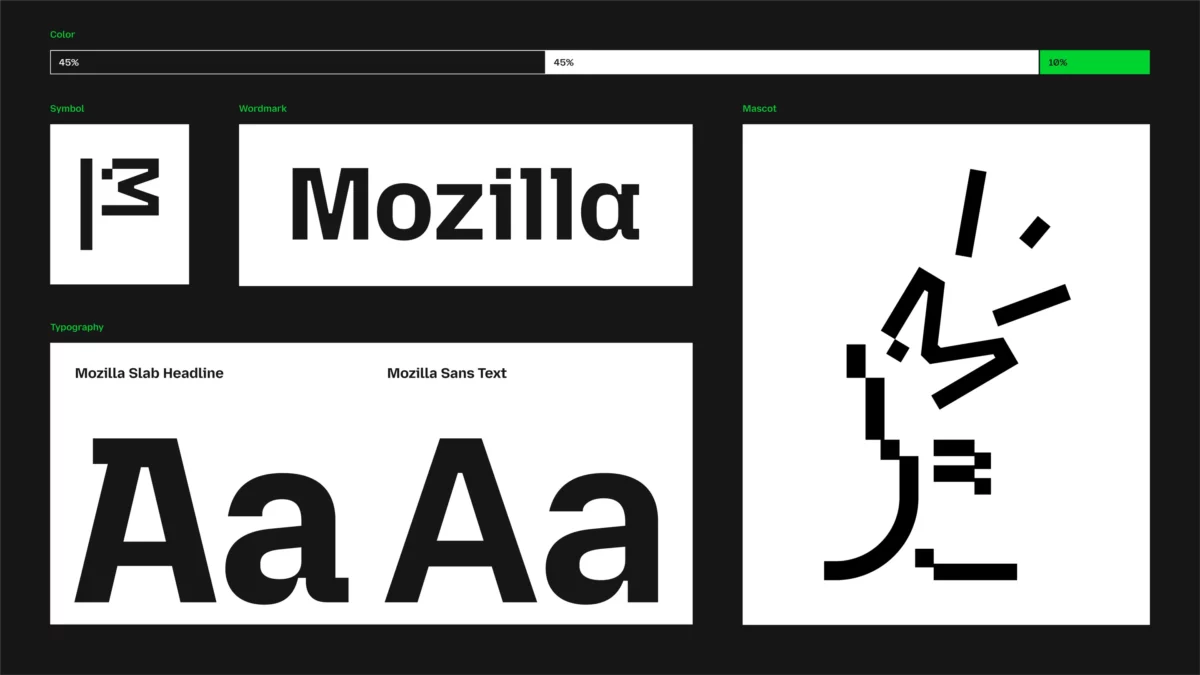
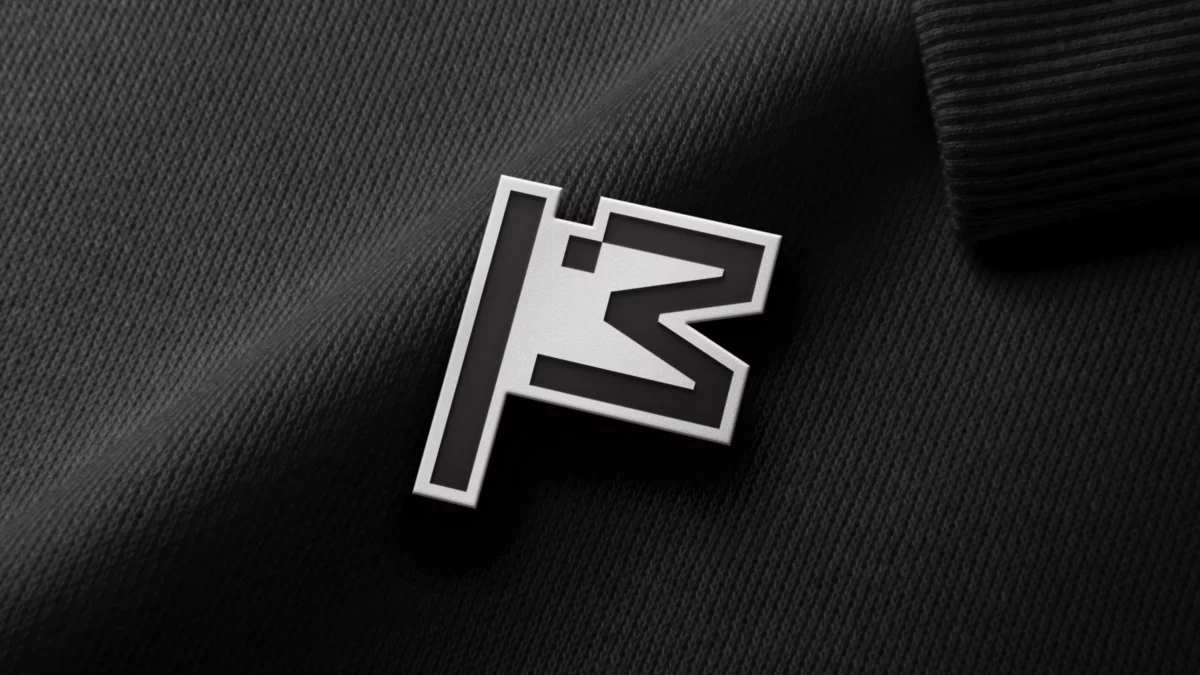
Neither distinct nor thought-provoking, logo recall would likely be incredibly low. But this could be about to change. The new identity harnesses Mozilla’s classic t-rex mascot, using its open jaws to create a stylised capital ‘M’.

This is certainly radically different to the bland Mozilla of the 2010s and would at last give the public something to pin down in their memories.
“The intention of this work is not in any way to devalue, but actually to strengthen the relationship between Mozilla and Firefox,” Bebbington explains.
“We have an opportunity for Mozilla to be better known, which is great, because if we make Mozilla better known, there’s all kinds of other amazing things that can happen – it can create a halo effect.
She continues: “At the same time, it can bring people into the Mozilla ecosystem, and on top of that give us an opportunity to also bring people into Firefox.”
Through sheer osmosis, the proliferation of the Mozilla brand in its own right will by extension lead to the growth of its portfolio, which naturally includes the very brand from whose shadow it needs to emerge.
Subscribe to Marketing Beat for free
Sign up here to get the latest marketing news sent straight to your inbox each morning
Fixing a ‘broken’ internet
Stepping out of the Firefox shadow isn’t all this rebrand seeks to address however, in fact its primary focus is a radical re-setting of the Mozilla brand itself.
At its heart, Bebbington points out, Mozilla is very much an ‘activist’ brand – set up at the dawn of the internet in 1998 as an entirely free service designed to make the web a better place.
In recent years it seems the brand has lost sight of this to a certain extent – and in a bid to reconnect with these activist roots, the campaign will be informed by the bold new mantra ‘reclaim the internet’.
“At the beginning of the brand work when we were starting to define the strategy, we were, looking to find the insights that informed our positioning statement, which is that is that Mozilla is the people’s platform where everyone can control the Internet,” Bebbington says.
“ What we learned is that a lot of people are finding that they’re very crowded and confused and getting a lot of bombardment from their use of the Internet.”
In essence – Mozilla’s new identity will to a certain extent aim to fix a ‘broken’ internet, characterised by what Bebbington calls a ‘lack of control’ that individuals now have over their data and personal privacy online.
Smith adds: “The Internet was born for people to share, to wonder, to explore, and it’s just become a place that can be a bit scary. “Especially when you think about your children using it – when you stop and think about it, you realise all the potential dangers.”
Measuring Mozilla success
Mozilla claims that with this rebrand it aims not to define itself for the next quarter, but for the next quarter century.
While this sentiment is admirable – if it is to strike out on its own merit, it’ll need this campaign to succeed.
Luckily for them, it has all the hallmarks of a promising new era. A clear direction of travel, backed by a panoply of creatively distinctive brand assets – with its flexible use of its classic t-rex mascot set to become a potential icon in the making.
The internet is a crowded space however, with much bigger players already well established and exercising a death grip of sorts on the sector.
So how would Mozilla measure its success?
Bebbington begins: “We’re not naïve to the fact that brand equity takes a while, it doesn’t change overnight. So I think in a year’s time, it will actually be very interesting to see what our brand equity scores are.”
“It would be really, really nice to get to a place where people actually understand what Mozilla is. So we don’t necessarily have to explain ourselves, but actually we’re a bit more in people’s minds and of the moment. We want to be relevant for the future.”
Smith continues: “We have to bring in new audiences as well. You’ve got to retain your existing audience, of course – which is an incredible community, but we have to stay relevant and gaining this recognition would be an incredible reward for the things we’re doing.”
That then, is the clear goal of this campaign, and ultimately its success will be measured by how relevant the Mozilla brand is able to become as result of it.
But, as Bebbington points out – this is very much the beginning, and generating any sort of recognition for Mozilla in its own right, and generating a basic understanding of what it does and what it stands for will be the perfect start for this root-and-branch rebrand.