Daniel Reid, senior insights analyst, SimilarWeb | Sponsored
Amid a dynamic adjustment in online consumer behaviour, global ecommerce growth has rebounded to a modest +1.4% YoY, following a period of decline. However, in the UK, ecommerce traffic is down -2.5% YoY; a trend experienced across most of the western world.
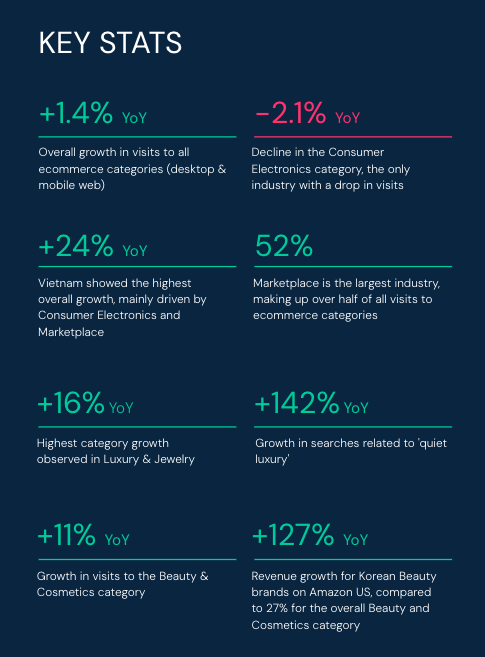 Consumers continue to be cautious about their spending and this is evident more so in the fashion industry than any other. Demand for pre-owned apparel continues to grow, with Vinted.co.uk visits growing +80% YoY followed by Depop (+40% YoY) – both of whom are at the forefront of the fastest-growing websites in the industry.
The Luxury and Jewelry sector continues to be the fastest-growing category globally at +15.8% YoY and +5.4% in the UK. Consumer demand is growing for brands in this category that match popular trends seen on social media. Bruno Cucinelli showed an impressive 55% YoY increase in searches – a brand now known for its ‘quiet luxury’ styles thanks to great social campaigns.
One industry that is not experiencing growth is Consumer Electronics. Shifting consumer priorities, likely influenced by economic constraints, have led to reduced spending on electronic goods and traffic to these players has declined -4% YoY in the UK.
Overall, the global ecommerce landscape continues to show resilience and the need for adaptability in an ever-changing global market.
Looking forward
The retail landscape is poised for a shift in the next 1-2 years, with a more optimistic outlook compared to the challenges of 2023. Here’s what we can expect:
- Economic easing: Relief is on the horizon. Inflation is projected to slow down, and interest rates have already begun to fall across much of the globe. This will provide much-needed breathing room for both businesses and consumers.
- Ecommerce rebound: The overall online shopping trend is expected to recover, with the exception of a few sectors. While consumer electronics may see a continued slowdown, most other industries can expect a resurgence in online sales.
- Beauty & luxury boom: Beauty and cosmetics are well placed to continue to see growth, driven by increased consumer desire for these products globally that shows little sign of slowing. Luxury retail appears to be similarly positioned but has a smaller potential audience of consumers..
- Brick-and-mortar potential: Though the decline of traditional retail might continue, it’s not a complete shut-down. The focus will shift towards offering a more compelling in-store experience that complements online options (think click-and-collect, personalised service).
- Generational shifts remain: Millennials and Gen Z will continue to be major players, influencing retail trends with their digital savviness and focus on value.
Based on our analysis, businesses should focus on optimising efforts in these three key areas:
- Traffic trends: While digital traffic growth might not reach pre-pandemic highs, it’s expected to stabilise and continue to experience modest increases in most sectors.
- Conversion is key: Businesses need to prioritise strategies that convert digital traffic into actual sales. This could involve targeted advertising, personalised recommendations, or improved user experiences.
- Data-driven approach: Big picture data remains important, but retailers who delve deeper into customer behaviour will be better positioned to capitalise on growth opportunities and improve conversion. Two ways in which brands and retailers can improve their data collection are through their direct offerings (DTC) and through app adoption – both trends that we are seeing with greater frequency.
The takeaway?
Retailers who adapt and embrace this evolving landscape will be well-positioned for success in the years to come.
To see the full State of Ecommerce report, visit this link